Why is my rabbit thumping?

If you’ve recently brought a bunny home, you might have experienced that sudden thud sound that makes you jump. Many new owners immediately wonder, “Why is my rabbit thumping?” It can sound loud, almost like someone tapping the floor hard with a stick.
Don’t worry—this behaviour is very common in pet rabbits. In most homes, thumping is simply your rabbit’s way of communicating something. Once you understand what it means, you’ll start reading your rabbit’s mood much more easily.
Let’s break it down in a simple and practical way.
What Does Rabbit Thumping Mean?
Thumping is when a rabbit hits its back leg strongly against the floor. In the wild, rabbits use this sound to warn others about danger. Even in our homes, that natural instinct stays with them.
Generally, rabbit thumping behaviour is a form of communication. Your rabbit isn’t being “naughty” or dramatic. They are trying to say something.
Here are the most common reasons.
Why Is My Rabbit Thumping at Night?

Many pet owners notice that thumping happens more at night. Rabbits are naturally more active during early morning and late evening hours.
Some common reasons include:
- Sudden noises (doors closing, pressure cooker whistle, ceiling fan sound)
- Shadows or unfamiliar movements
- New pets in the house
- Changes in lighting
- Feeling lonely or bored
In Indian homes, sounds like utensils clanking or bikes passing outside can easily startle them. Their hearing is extremely sensitive.
If your rabbit is thumping at night repeatedly, try observing what changes around that time.
Is My Rabbit Scared?

Very often, when someone asks, “Why is my rabbit thumping?”, the simple answer is: your rabbit might be scared.
Rabbits are prey animals by nature. Even small changes can feel like a threat to them.
Signs your rabbit may be scared:
- Ears standing straight up
- Body frozen in one position
- Wide eyes
- Hiding immediately after thumping
If you notice these signs, calmly sit near them. Avoid sudden movements. In most cases, they calm down once they realise everything is safe.
Rabbit Thumping When Angry
Yes, rabbits can get annoyed too.
Sometimes thumping is not fear—it’s frustration. This is especially common when:
- You rearrange their cage or play area.
- You clean their litter tray.
- You wake them up suddenly.
- You stop them from chewing something they like.
This type of rabbit thumping when angry is usually short and sharp. They may even turn their back towards you afterward. It’s their way of saying, “I don’t like that.”
Give them a little space. They usually forget about it quickly.
Why Does My Rabbit Thump and Run Away?
If your rabbit thumps and then runs to hide, it usually means they sensed something uncomfortable.
Common triggers include:
- Loud TV volume
- Children running nearby
- Vacuum cleaner
- New visitors
- Sudden touch from behind
This behaviour is closely linked to why rabbits stomp their feet in general—it’s an alert signal.
Instead of chasing them, let them settle. For many pet owners, creating a quiet corner in the room reduces this behaviour significantly.
Rabbit Thumping for Attention
Sometimes the reason is surprisingly simple—attention.
In some homes, rabbits learn that thumping makes the owner come immediately. If they want:
- Food
- Playtime
- Freedom outside the enclosure
- Interaction
They may thump once or twice.
This type of rabbit thumping for attention is usually done while looking in your direction. It’s less about fear and more about communication.
However, try not to reward constant thumping immediately every time. Otherwise, it can become a habit.
Why Is My Rabbit Thumping in His Cage?

If your rabbit mostly thumps inside the enclosure, check a few basic things:
- Is the cage too small?
- Is the flooring uncomfortable?
- Is the area too noisy?
- Is there enough enrichment (toys, hay, chew items)?
In many beginner setups, cages are placed near the main door or TV. That can make rabbits nervous.
Improving the rabbit environment setup often reduces unnecessary thumping.
Understanding Rabbit Body Language
To truly understand why is my rabbit thumping, you need to observe full body language.
Thumping rarely comes alone. It’s usually paired with:
- Ear position changes
- Tail flicking
- Sudden alert posture
- Hiding behaviour
Learning basic rabbit body language helps you respond correctly instead of panicking.
Spend quiet time watching your rabbit daily. Over time, you’ll start recognising patterns.
Common Beginner Mistakes
Many new rabbit owners unknowingly make small mistakes that increase thumping behaviour.
Here are some common ones:
- Picking up the rabbit too frequently
- Keeping the enclosure in a noisy place
- Sudden changes in routine
- Forcing interaction
- Not providing hiding spots
Rabbits feel safest when they have control over their space. Even a simple cardboard hideout box can make a big difference.
How to Calm a Thumping Rabbit
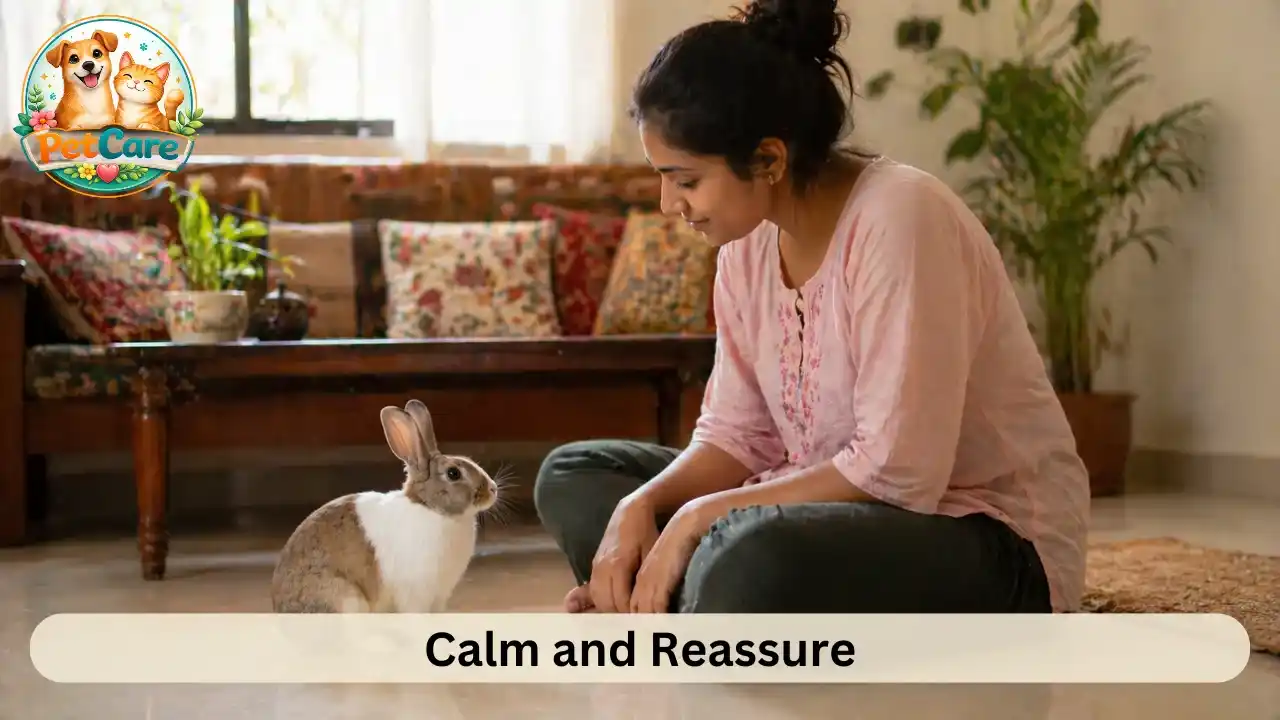
If you’re wondering how to calm a thumping rabbit, try these simple steps:
- Stay calm yourself.
- Speak softly.
- Dim harsh lighting.
- Remove obvious noise triggers.
- Sit quietly nearby without touching immediately.
Generally, rabbits calm down faster when they feel no pressure.
Avoid tapping back or shouting. That only increases their stress.
When Thumping Is Normal
Not every thump is a problem.
In most homes, occasional thumping is completely normal. It shows your rabbit is alert and aware of surroundings.
It becomes concerning only if:
- Thumping is constant and intense.
- Your rabbit refuses to eat or move.
- There are major behaviour changes.
In such cases, observing overall behaviour is more important than focusing only on the thump.
Creating a Peaceful Home for Your Rabbit

Prevention is always easier than correction.
Here’s what usually helps:
- Keep the enclosure in a calm corner.
- Maintain a consistent daily routine.
- Provide enough hay and chewing options.
- Allow safe floor time daily.
- Avoid sudden loud music or shouting near them.
In many Indian households, managing noise is challenging. But even small adjustments—like closing windows during heavy traffic hours—can help.
A happy rabbit feels secure. And a secure rabbit thumps less.
FAQs(Frequently asked questions)
No, not always. Thumping is natural communication. Occasional thumping is normal in most rabbits.
Sudden darkness can startle them. Try dimming lights gradually instead of switching them off instantly.
Rarely. Thumping is usually linked to alertness, fear, or annoyance. Happy rabbits more commonly “binky”
First observe the reason. If it’s fear, reassure calmly. If it’s attention-seeking, avoid immediately rewarding repeated behaviour.
A Few Honest Words Before You Go
So next time you hear that strong thud and think, “Why is my rabbit thumping?”, pause before worrying.Your rabbit is simply communicating.It could be fear, annoyance, boredom, or even attention-seeking. By observing patterns and improving the environment, you will slowly understand what your rabbit is trying to say.Living with a rabbit is all about patience. The more you listen to them, the stronger your bond becomes.You need to build friendship with your rabbit.