What rabbits can eat daily? (safe food list)
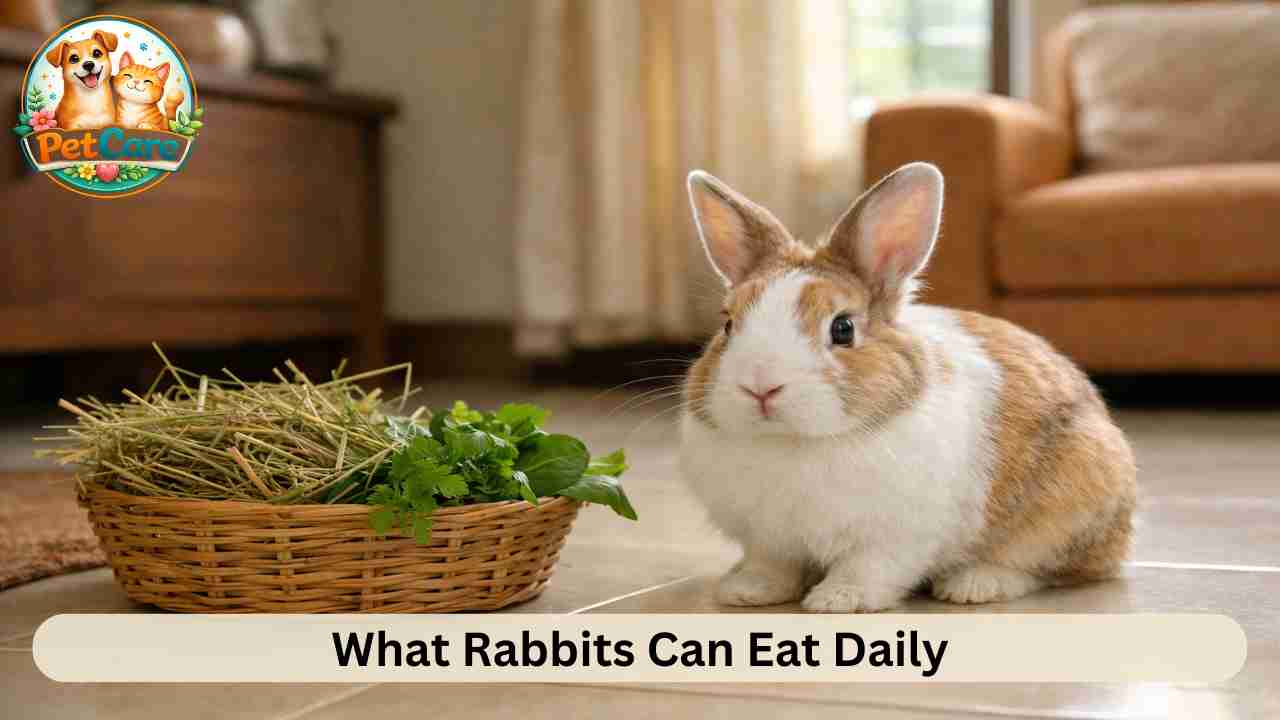
If you’ve recently brought home a bunny, one of the first questions that comes to mind is: What rabbits can eat daily? (safe food list). I remember feeling the same when I had my first rabbit. They look small and simple to care for, but when it comes to food, it’s easy to get confused.
In most Indian homes, we assume rabbits can eat just any vegetable lying in the kitchen. But that’s not always safe. Rabbits have sensitive digestion, and feeding the right balance daily makes a big difference in how active and happy they are.
In this guide, I’ll share a practical, beginner-friendly rabbit safe food list and explain what to feed, how much to feed, and what to avoid — all in simple, everyday language.
What Rabbits Can Eat Daily? (Safe Food List for Beginners)
A rabbit’s daily diet is actually very simple. The key is fresh hay first, vegetables second, and pellets in small amounts.
Here’s how you should look at it.
1. Hay – The Most Important Daily Food

If you remember just one thing from this article, remember this:
Hay should make up most of your rabbit’s diet.
In fact, good quality grass hay is the backbone of a healthy rabbit feeding routine.
Safe hay options:
Timothy hay
Orchard grass
Meadow grass hay
Oat hay
Hay helps in:
Keeping digestion regular
Supporting natural chewing habits
Preventing boredom in indoor rabbits
Keep hay available all the time. In most homes, rabbits like to nibble throughout the day rather than eat large meals.
Tip: Always store hay in a dry place. Damp hay can spoil quickly.
2. Fresh Leafy Greens (Daily in Moderate Amounts)
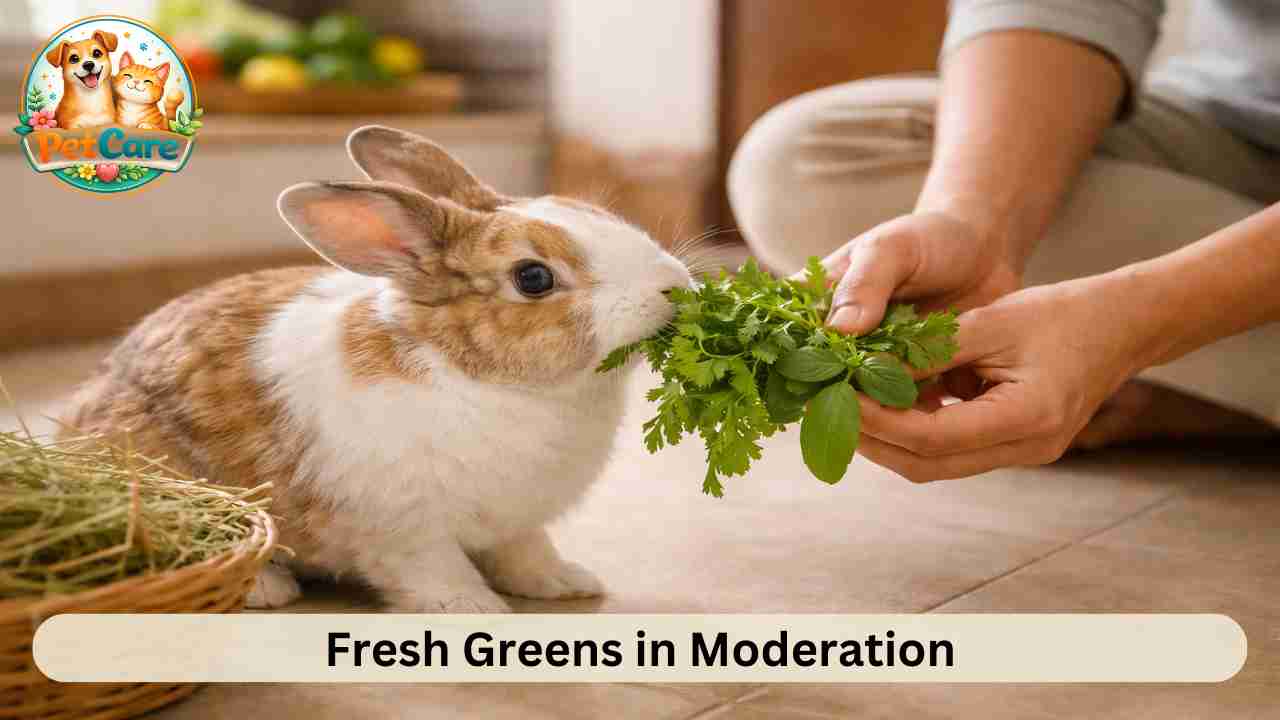
Many pet owners ask about vegetables rabbits can eat every day. Leafy greens are generally safe when given in proper portions.
Safe leafy greens for rabbits:
Coriander (dhaniya leaves)
Mint leaves (in small amounts)
Spinach (limited quantity)
Fenugreek leaves (methi, occasionally)
Romaine lettuce
Basil leaves
Carrot tops
Wash all greens properly to remove dirt and dust. In many Indian households, leafy vegetables are easily available, which makes feeding convenient.
Avoid serving wet leaves straight from washing. Let them dry slightly first.
3. Limited Rabbit Pellets
Pellets are helpful, but they should not replace hay or fresh vegetables.
Choose:
Plain grass-based pellets
No colorful bits or sugary pieces
A small measured portion daily is enough. Overfeeding pellets is a common beginner mistake, especially when rabbits look excited while eating them.
Remember: pellets are a supplement, not the main meal.
4. Fresh Vegetables (Rotation Is Better)

Apart from leafy greens, rabbits can enjoy certain vegetables in small daily portions.
Safe vegetables for rabbits:
Bottle gourd (lauki)
Capsicum (all colours)
Cucumber
Carrot (small slices only)
Zucchini
Pumpkin (small cubes, plain)
Many first-time owners give too much carrot because rabbits love it. But carrots are slightly sweet and should be limited.
When thinking about what vegetables rabbits can eat daily, variety is better than quantity. Rotate options through the week.
5. Fruits (Occasional Treat, Not Daily)
This surprises many people. Fruits are safe, but not daily.
They are more like treats.
Examples:
Small apple slices (without seeds)
Banana slices
Papaya pieces
Watermelon (without seeds)
Too much fruit can upset the balance of the diet. In most homes, fruit is given out of love — but moderation keeps things safe.
How Much Should You Feed Daily?
Here’s a simple daily rabbit diet guide:
Unlimited hay
1 cup mixed leafy greens per kg body weight
Small portion of vegetables
Limited pellets (as per packet instructions)
Fresh clean water at all times
Always observe your rabbit’s eating habits. A healthy rabbit usually eats regularly throughout the day.
Best Feeding Routine for Indoor Rabbits
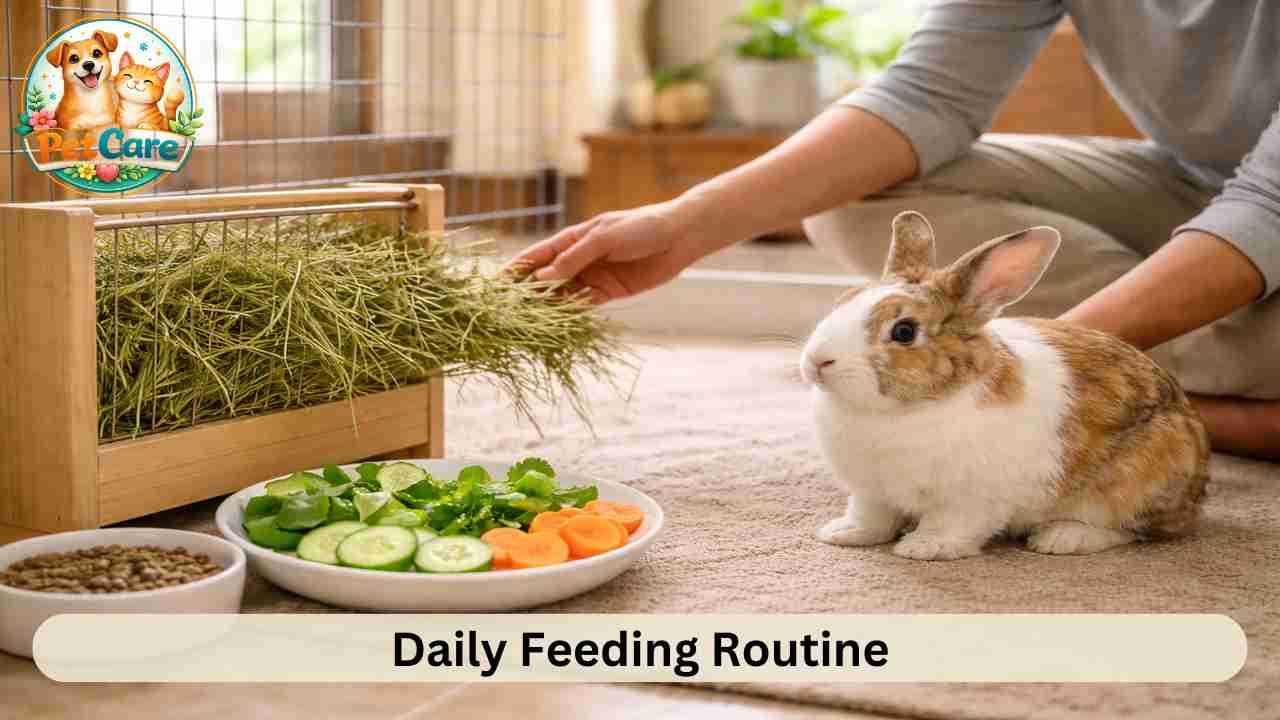
For indoor pet rabbits, routine matters.
In many homes, rabbits are most active early morning and evening. You can follow this simple pattern:
Morning:
Fresh hay top-up
Greens portion
Small pellet serving
Evening:
Fresh vegetables
Hay refill
Clean water bowls or bottles daily.
This routine keeps feeding predictable and stress-free.
Common Beginner Mistakes to Avoid
When learning about what rabbits can eat daily? (safe food list), beginners often make these mistakes:
1. Feeding too many sugary foods
Bananas and carrots are not daily staples.
2. Giving kitchen scraps blindly
Not every vegetable leftover is safe.
3. Ignoring hay
Hay is not optional — it is essential.
4. Sudden diet changes
Always introduce new foods slowly. Add one new item at a time and observe.
5. Overfeeding pellets
Many rabbits prefer pellets, but too much can disturb their natural feeding pattern.
Foods You Should Avoid Completely
For safety, avoid:
Chocolate
Bread
Biscuits
Fried snacks
Onion and garlic
Potato
Iceberg lettuce
Processed human food
Rabbits have delicate digestion. Stick to natural, fresh foods.
Seasonal Feeding Tips (Indian Homes)
In Indian weather, small adjustments help:
During Summer:
Add more hydrating vegetables like cucumber.
Keep water cool and clean.
Avoid leaving fresh greens out for too long.
During Winter:
Ensure hay availability is increased.
Slightly adjust green portions if needed.
In most homes, rabbits adapt well when their main diet remains consistent.
How to Store Rabbit Food Safely
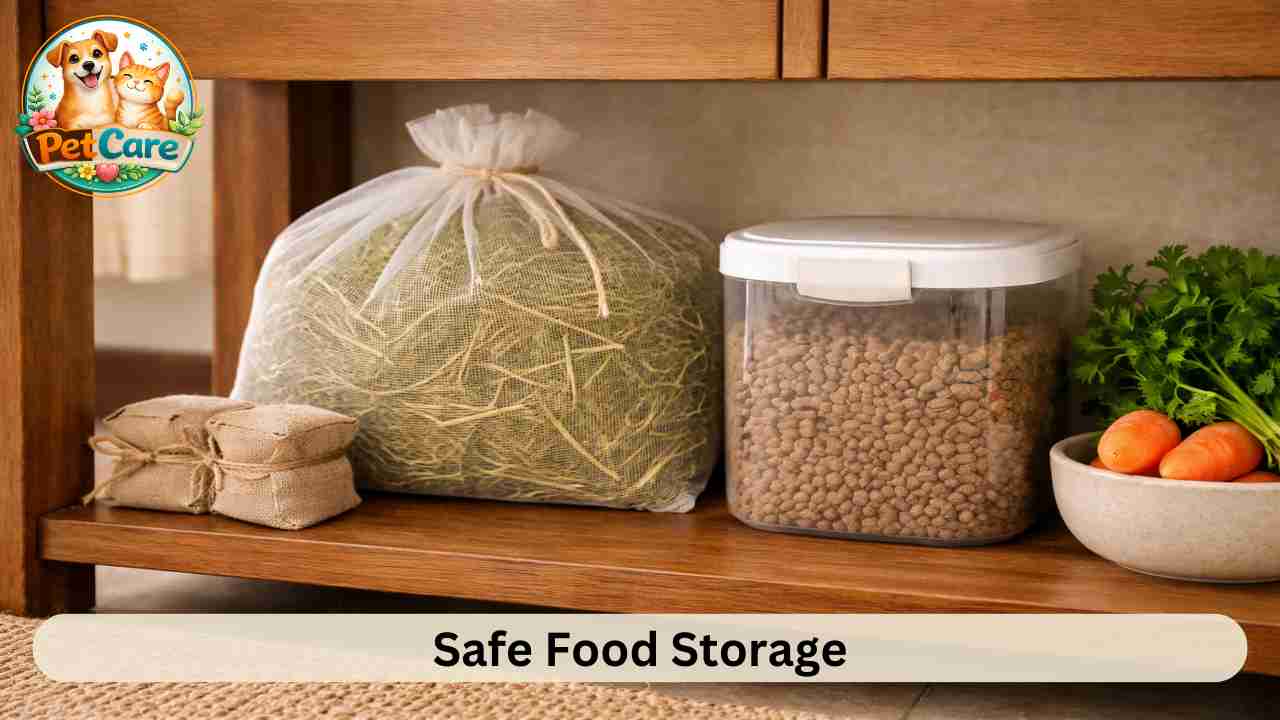
Store hay in a breathable bag.
Keep pellets in airtight containers.
Wash vegetables properly.
Avoid feeding spoiled or wilted food.
Freshness matters more than fancy packaging.
Understanding Your Rabbit’s Eating Behavior
Every rabbit has preferences. Some love mint, some ignore it. Some eat slowly, others nibble constantly.
Generally, a happy rabbit:
Eats hay frequently
Shows interest in fresh greens
Drinks water regularly
Stays active
Feeding is also bonding time. In many pet-friendly homes, owners sit beside their rabbit during feeding. It builds trust naturally.