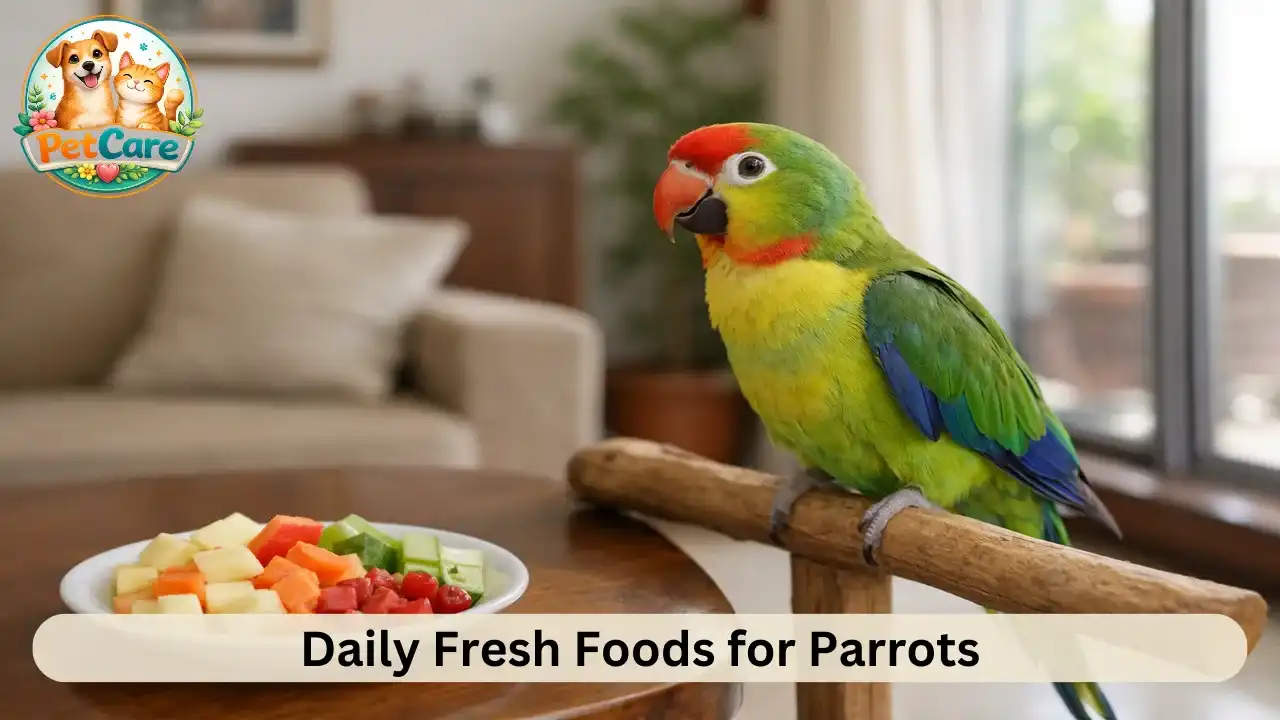
Safe fruits and vegetables for parrots (daily feeding list)

Safe fruits and vegetables for parrots (daily feeding list)

If you have recently brought home a parrot, one of the first questions that comes to mind is, “What exactly should I feed it every day?” Most of us in India are comfortable feeding seeds and grains, but parrots need more variety to stay active and happy.

Over the years, many pet owners have realised that fresh produce plays a big role in a balanced parrot diet. Knowing the safe fruits and vegetables for parrots (daily feeding list) helps you plan simple, natural meals without overthinking it.

In this guide, I’ll share practical suggestions that work in most homes, using fruits and vegetables that are easily available in local markets.

Why Fresh Fruits and Vegetables Matter in a Parrot’s Diet

Parrots in the wild eat a wide range of plant-based foods. In our homes, they depend completely on what we provide. A diet made only of seeds can become repetitive and doesn’t offer enough variety.

Adding fresh produce:

  • Provides natural variety

  • Keeps mealtime interesting

  • Encourages natural chewing habits

  • Supports overall daily nutrition

You don’t need fancy imported fruits. Simple, clean, fresh items from your kitchen can work perfectly when chosen carefully.

Safe Fruits and Vegetables for Parrots (Daily Feeding List)

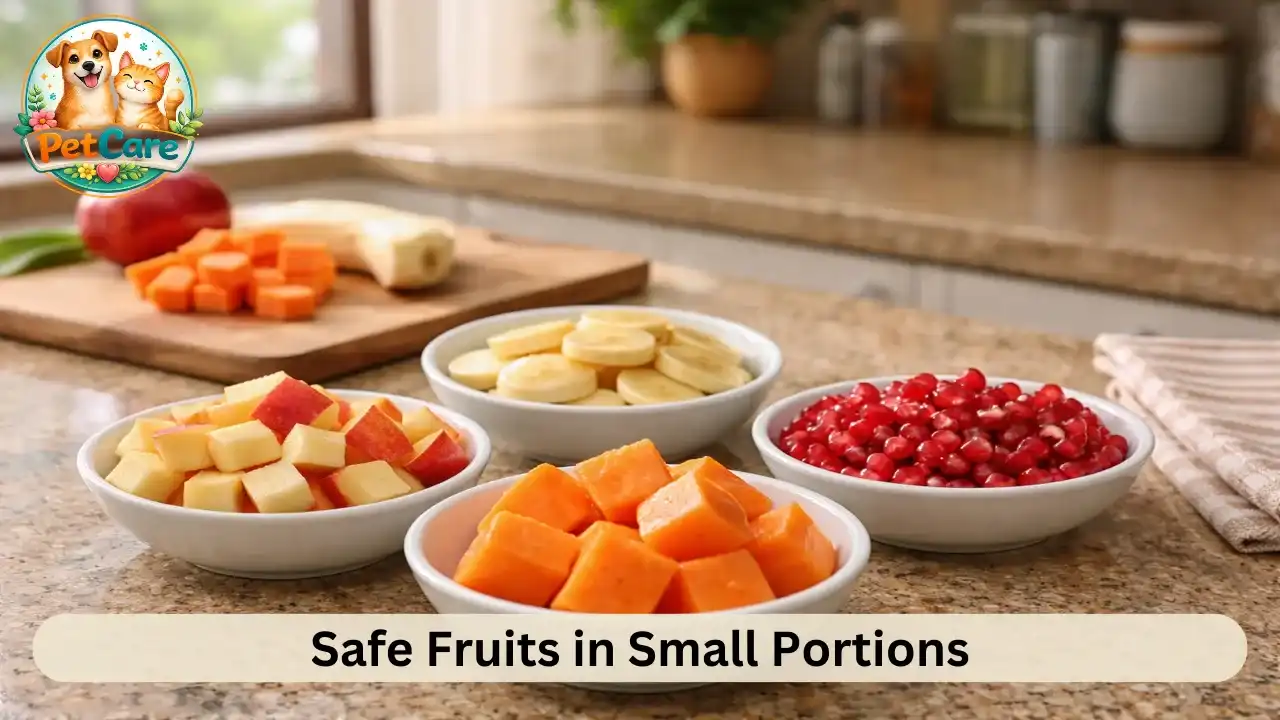
Small bowls of freshly chopped apple, banana, papaya, and pomegranate prepared on a kitchen counter for a pet bird.

Let’s break this down into fruits and vegetables you can commonly offer.

Safe Fruits for Parrots (Offer in Moderation)

Fruits are naturally sweet, so they are best given in small portions.

Here are commonly used fruits safe for parrots:

  • Apple (remove seeds)

  • Banana

  • Papaya

  • Pomegranate

  • Mango (seasonal is fine)

  • Guava

  • Pear (remove seeds)

  • Orange (small pieces)

  • Watermelon (seedless or remove seeds)

  • Muskmelon

These are generally considered some of the best fruits for parrots daily feeding, especially when rotated instead of repeating the same one every day.

Tip: Always wash fruits thoroughly and cut into small, manageable pieces.

Safe Vegetables for Parrots (Daily Use Friendly)
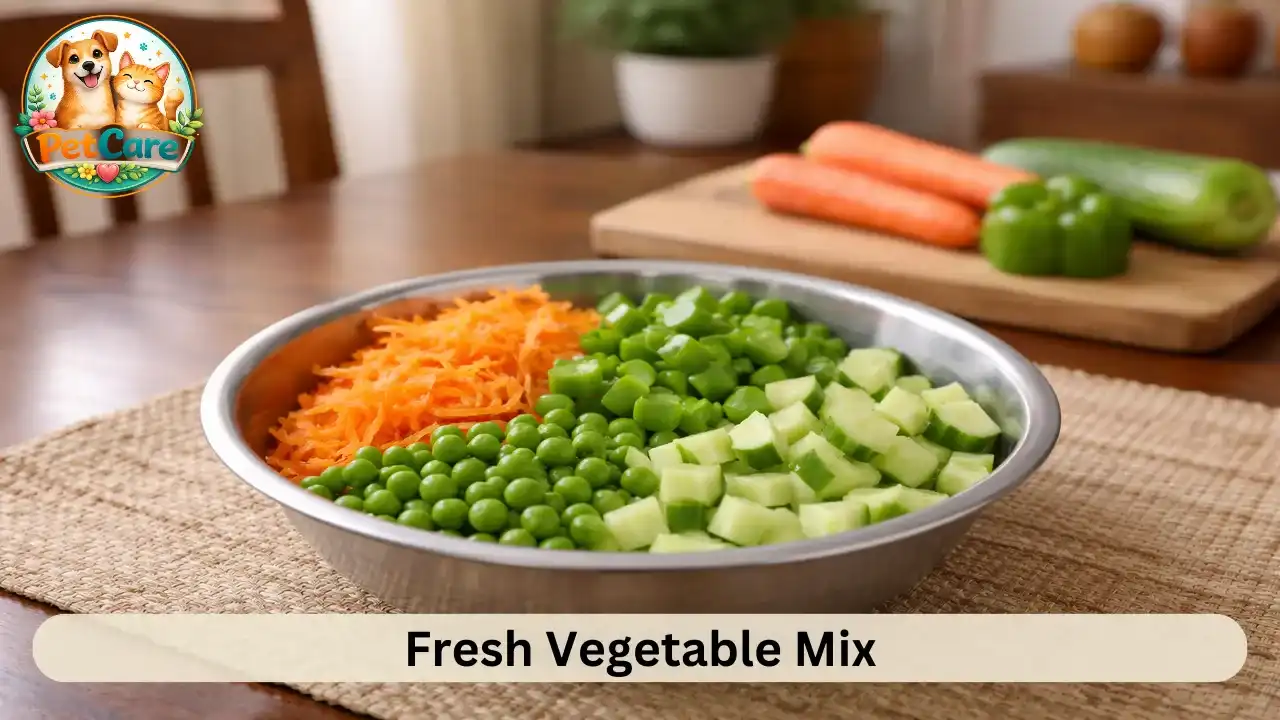
Bowl filled with freshly chopped carrots, capsicum, peas, and cucumber prepared for a household parrot.

Vegetables should form a bigger part of the daily fresh portion.

Here are safe vegetables for parrots you can use regularly:

  • Carrot (grated or chopped)

  • Spinach (small amounts)

  • Coriander leaves

  • Bottle gourd (lauki)

  • Cucumber

  • Capsicum (all colours)

  • Green peas (fresh or lightly steamed)

  • Pumpkin

  • Beans (chopped finely)

  • Broccoli

Many experienced owners feel vegetables are more important than fruits because they are not sweet and are closer to what parrots naturally chew on.

If you’re wondering about a proper parrot daily feeding guide, a simple approach is:

  • 60–70% high-quality staple food (like pellets or seeds depending on your setup)

  • 20–30% fresh vegetables

  • 5–10% fruits

This balance works well in most homes.
How to Prepare Fruits and Vegetables for Parrots

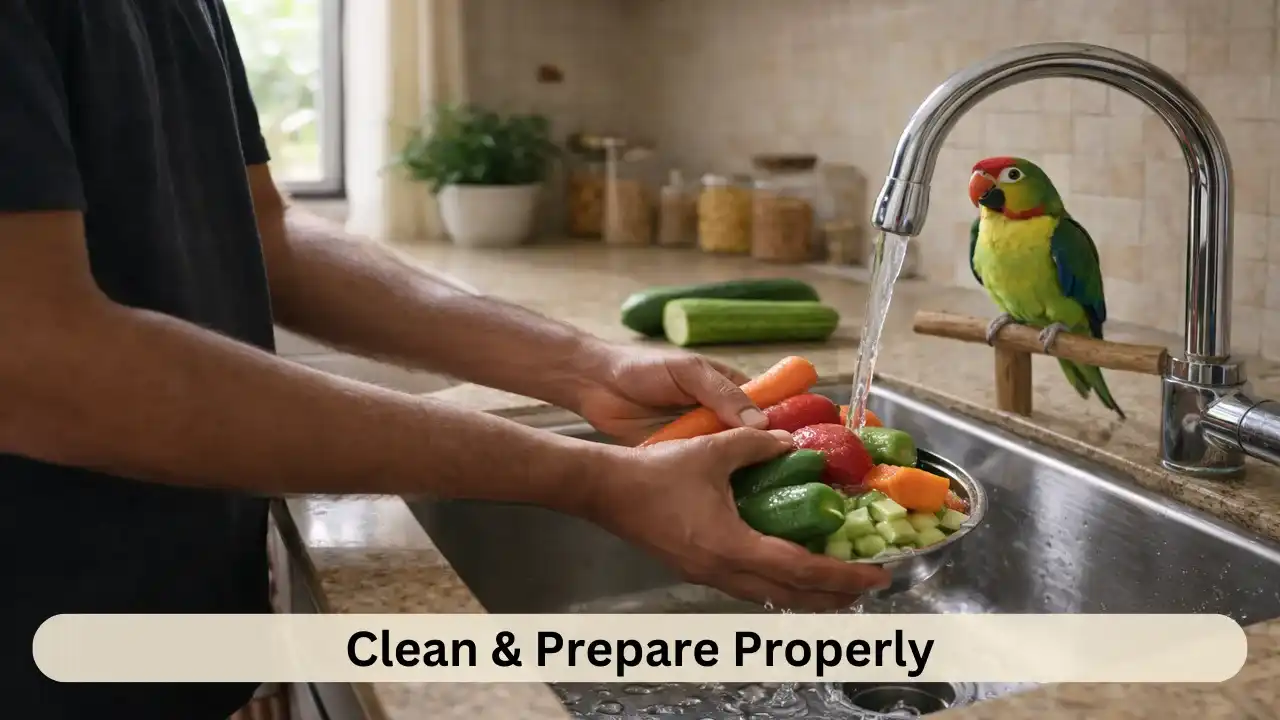
Pet owner washing vegetables in a home kitchen while their parrot sits calmly on a nearby perch.

Preparation matters just as much as selection.

Here are simple steps to follow:

  • Wash thoroughly with clean water.

  • Avoid adding salt, sugar, or spices.

  • Never fry or cook in oil.

  • Chop into small bite-sized pieces.

  • Serve fresh and remove leftovers after a few hours.

If you are making a small fresh food mix for parrots, you can combine:

  • Grated carrot

  • Chopped capsicum

  • Small banana slice

  • Few pomegranate seeds

Mix lightly and offer in a clean bowl.

Common Beginner Mistakes When Feeding Fresh Produce

Almost every new parrot owner makes some mistakes. It’s normal.

Here are a few to avoid:

1. Feeding Only Fruits

Fruits are loved by parrots because they are sweet. But overfeeding fruits daily can make them picky and ignore vegetables.

2. Not Rotating Foods

Giving the same item every day can make meals boring. Try rotating different safe vegetables for parrots during the week.

3. Leaving Fresh Food Too Long

In warm Indian weather, fruits spoil quickly. Remove leftovers after 2–3 hours.

4. Offering Large Pieces

Big chunks may be ignored or thrown out of the cage. Smaller pieces are easier to handle.

Unsafe Fruits and Vegetables to Avoid

While discussing the safe fruits and vegetables for parrots (daily feeding list), it’s equally important to know what to avoid.

Common items not suitable for parrots:

  • Avocado

  • Onion

  • Garlic

  • Raw potato

  • Fruit seeds (like apple seeds)

  • Very spicy chillies

Also avoid anything salty, sugary, fried, or packaged.

When in doubt, keep it simple. If something feels processed or heavily seasoned, it’s best not to give it.

How Much Should You Feed Daily?

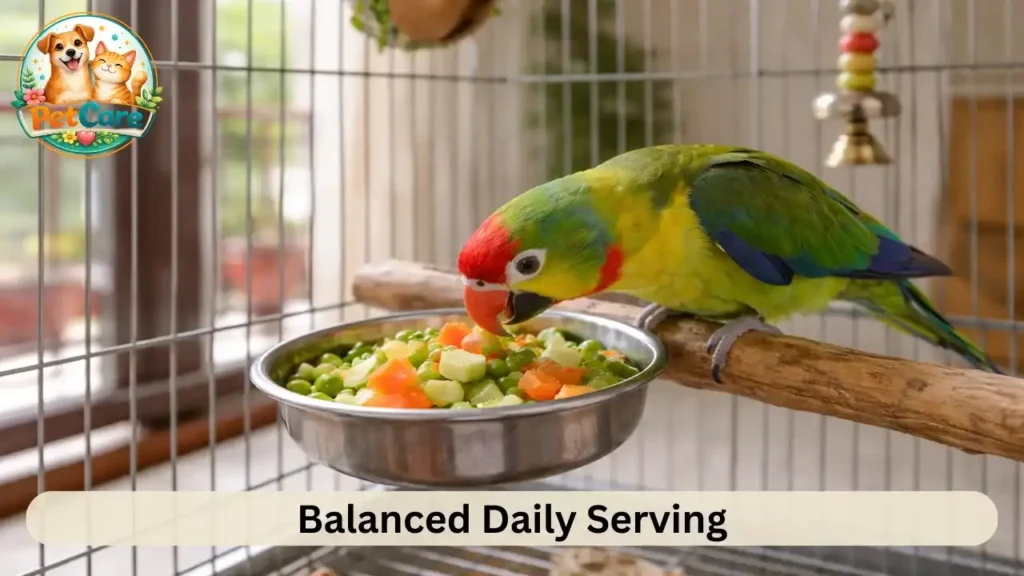
Parrot enjoying a small portion of freshly chopped vegetables in its feeding bowl inside a home setting.

Portion size depends on the parrot’s size and species.

For small parrots (like budgies or lovebirds):

  • 1–2 tablespoons of fresh mix daily is usually enough.

For medium parrots (like cockatiels or conures):

  • 2–3 tablespoons of mixed vegetables and small fruit pieces.

For larger parrots:

  • Slightly more, but always observe how much they actually eat.

Fresh food should be seen as part of a balanced parrot diet, not the only food.

Creating a Simple Weekly Rotation Plan

Here’s an example of a rotating parrot fruit and vegetable chart:

Monday:
Carrot + Cucumber + Papaya

Tuesday:
Capsicum + Beans + Apple

Wednesday:
Spinach + Green peas + Banana

Thursday:
Pumpkin + Broccoli + Pomegranate

Friday:
Bottle gourd + Coriander + Mango

Saturday:
Capsicum + Carrot + Guava

Sunday:
Mixed leftover safe veggies + small fruit treat

This kind of variety supports good daily nutrition for parrots without making things complicated.

Encouraging Picky Eaters

Some parrots throw vegetables out of the bowl in the beginning. Don’t worry.

Here are simple tricks that help in many homes:

  • Offer vegetables first thing in the morning when they’re hungry.

  • Chop finely and mix with small seed portions.

  • Eat in front of them (parrots are curious and copy behaviour).

  • Try different cutting styles (grated vs diced).

Patience is important. It sometimes takes a few days for parrots to accept new items.

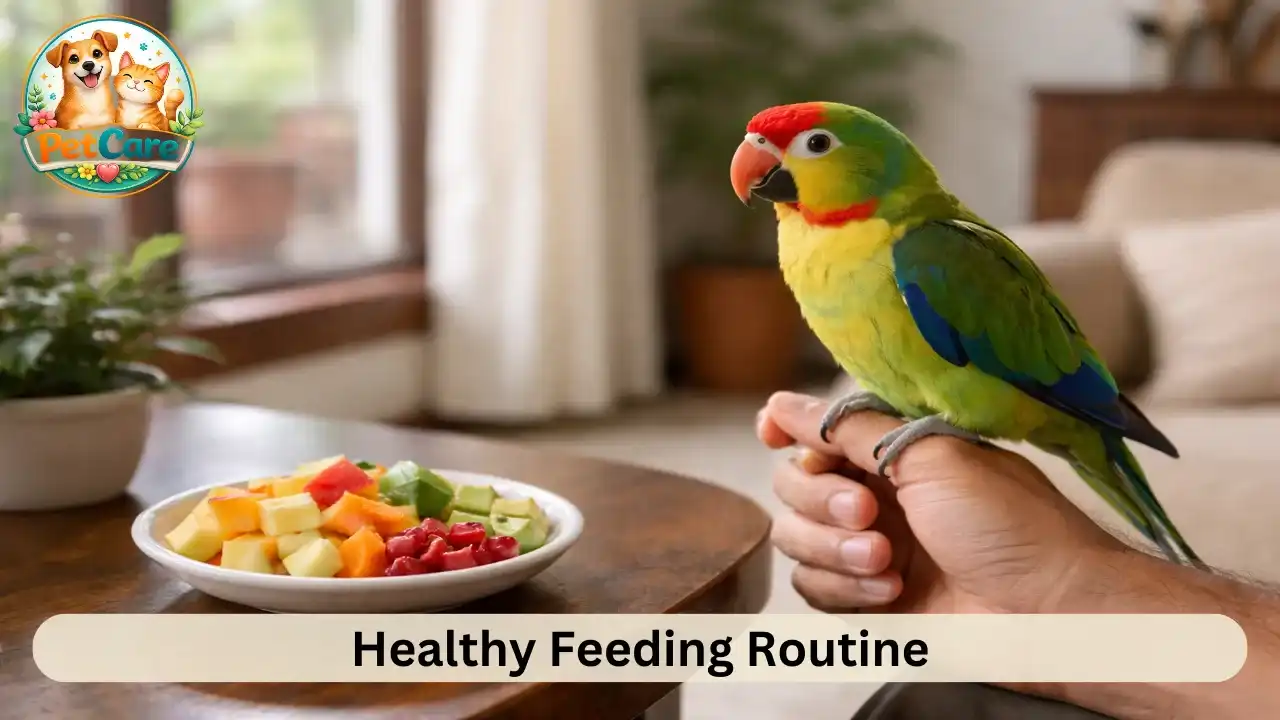
Parrot sitting comfortably on its owner’s hand with a bowl of freshly prepared food nearby in a bright home environment.

FAQs About Safe fruits and vegetables for parrots

1. Can parrots eat fruits every day?

Yes, but in small portions. Vegetables should usually make up a larger part of the fresh food portion.


2. Do I need to cook vegetables before feeding?

Most vegetables can be given raw after washing and chopping. Some harder vegetables can be lightly steamed, but avoid spices or salt.

3. Can parrots eat seasonal Indian fruits?

Yes, many seasonal fruits like mango, guava, and papaya are commonly offered. Just ensure seeds are removed and pieces are small.

4. How long can fresh food stay in the cage?

Generally, 2–3 hours is a safe limit, especially in warm weather. After that, remove leftovers.

Final Thoughts

Feeding parrots doesn’t have to feel confusing.It is very easy. When you understand the safe fruits and vegetables for parrots (daily feeding list), it becomes much easier to plan meals naturally.
You just need to focus on-
1)Fresh, clean ingredients
2)Proper rotation
3)Balanced portions
4)Avoiding unsafe foods
In most Indian households, easily available fruits and vegetables are more than enough to maintain a healthy feeding routine.The goal is not perfection, but consistency. Observe your parrot, notice what it enjoys, and slowly build a daily routine that works for both of you.