Pet Safety Tips Inside the House

Bringing a pet home is a happy moment, but it also comes with responsibility. In most homes, pets are treated like family members, and just like children, they need a safe environment to stay healthy and comfortable. Many new pet owners focus on food and play but often overlook basic safety inside the house.
These pet safety tips inside the house are simple, practical, and based on everyday situations. You don’t need anything fancy—just a bit of awareness and small changes in your daily routine can make a big difference.
Let’s go step by step and make your home a safer place for your pet.
Why Pet Safety at Home Matters
In Indian households, pets often roam freely—from living rooms to kitchens and sometimes even balconies. While this freedom is good for their happiness, it can also expose them to common household dangers.
Things like open wires, slippery floors, or small objects lying around may seem harmless to us but can cause trouble for pets. So, understanding indoor pet safety tips helps you prevent avoidable accidents.
Pet-Proofing Your Living Space
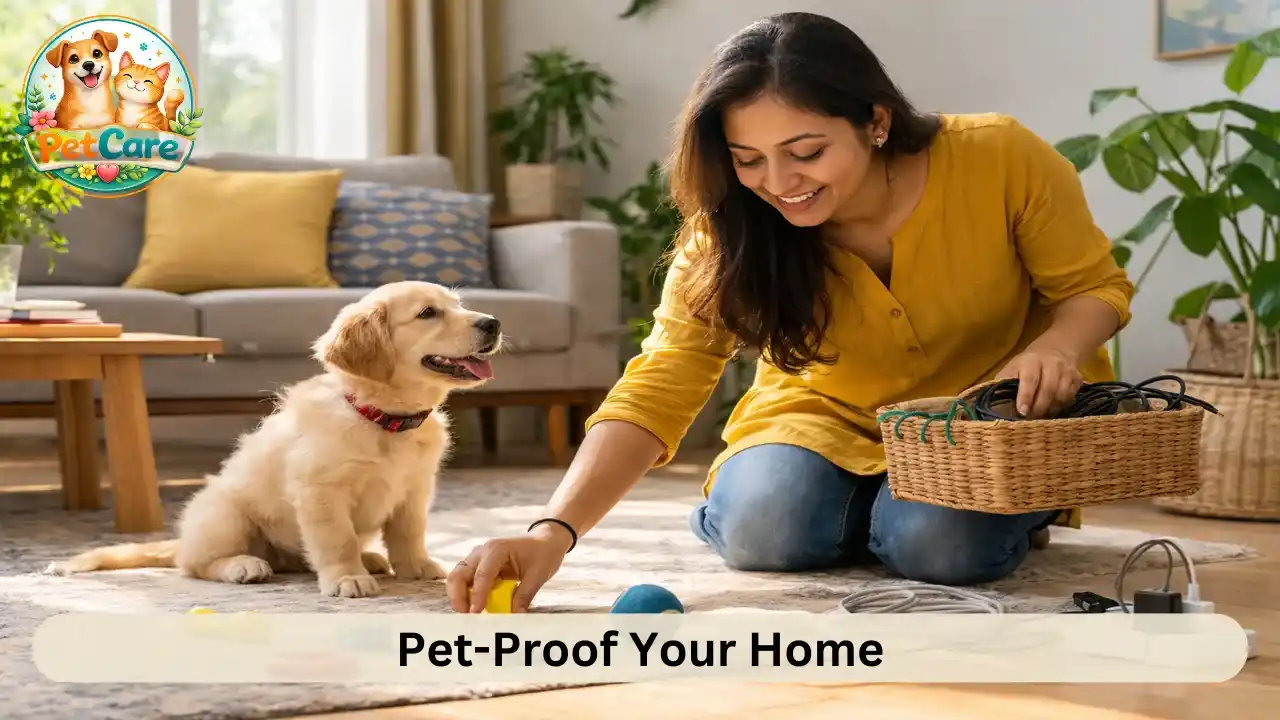
Start with Basic Pet-Proofing
Pet-proofing your home is similar to child-proofing. Look at your home from your pet’s perspective.
Here are some simple pet-proofing home tips:
Keep electrical wires out of reach or covered
Avoid leaving small items like coins, rubber bands, or buttons on the floor
Secure heavy objects that can fall easily
Cover sharp edges of furniture if your pet is very active
For many pet owners, these small steps prevent common accidents at home.
Keep the Kitchen Off-Limits (or Supervised)
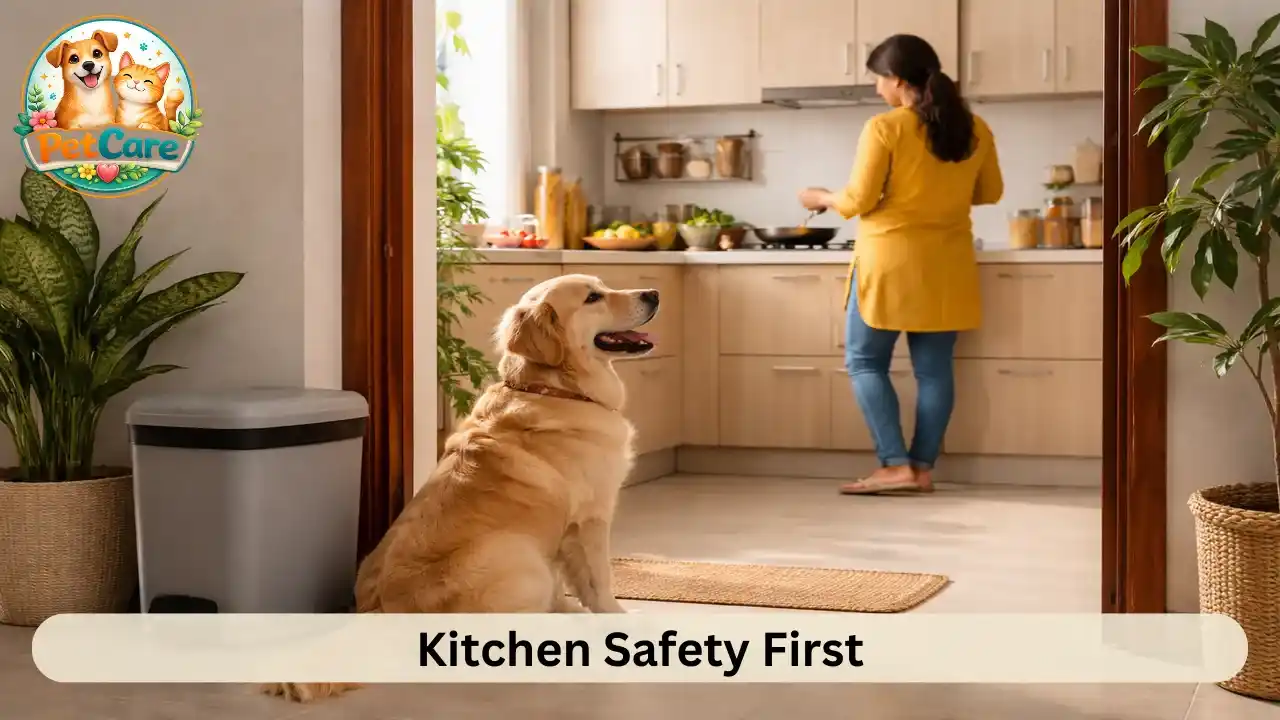
The kitchen is one of the most risky areas for pets.
Common kitchen hazards for pets:
Hot utensils and gas stoves
Spilled food or liquids
Open dustbins
Cleaning liquids stored under the sink
Try to restrict access or supervise your pet when they are near the kitchen. A simple habit like keeping the dustbin covered can improve home safety for dogs and cats.
Safe Flooring and Walking Areas
In many Indian homes, tiles or marble floors are common. While they look good, they can be slippery for pets.
How to make floors safer:
Use rugs or mats in areas where your pet walks frequently
Keep floors dry, especially after mopping
Avoid sudden running or jumping areas near stairs
These small changes help in preventing pet accidents at home.
Balcony and Window Safety
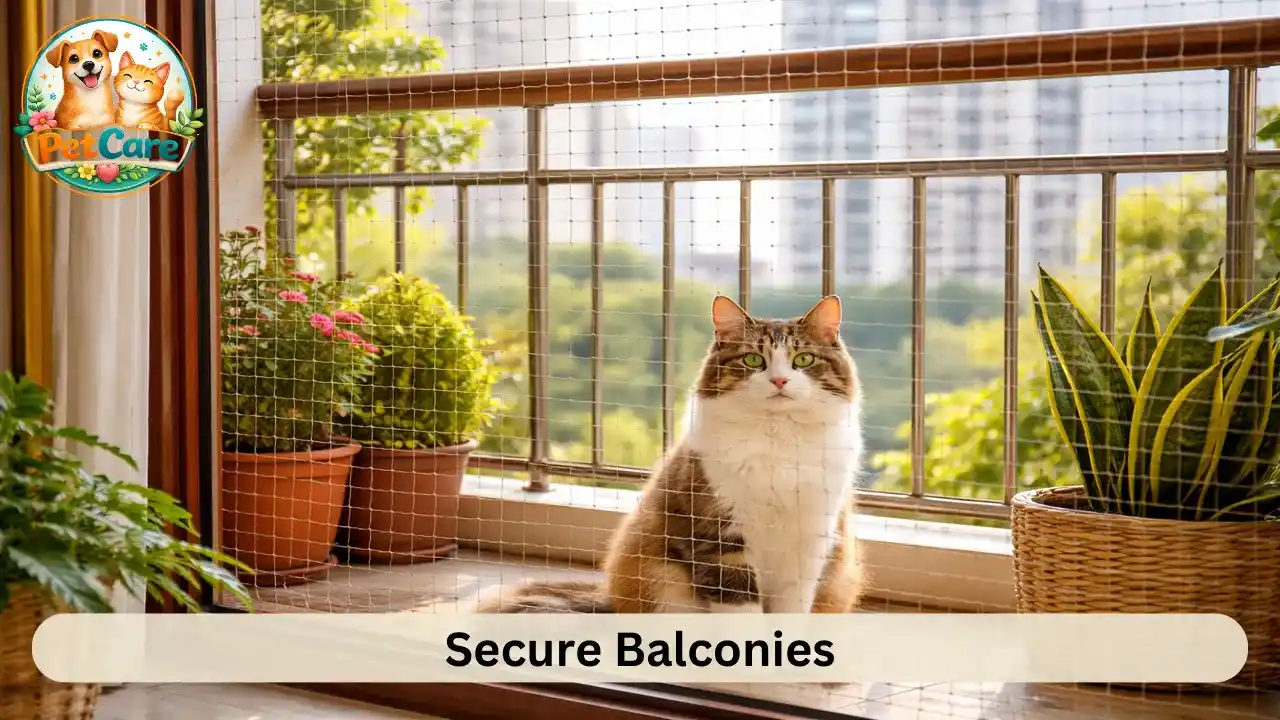
Balconies and windows are often overlooked but can be dangerous, especially for cats and small pets.
Important pet safety tips inside the house for balconies:
Install safety nets or grills
Avoid placing chairs or tables near railings
Never leave pets unattended on open balconies
Pets are naturally curious, and even a small distraction can lead to a risky situation.
Manage Electrical and Electronic Items
Pets, especially puppies and kittens, love chewing things. Electrical items can become a serious hazard.
Pet safety around electronics:
Hide or bundle wires neatly
Avoid leaving chargers plugged in unnecessarily
Keep remote controls and small gadgets out of reach
This is one of the most important safety tips for indoor pets, especially for young ones.
Choose Pet-Safe Household Items
Many everyday items we use can be unsafe for pets if left unattended.
Watch out for:
Glass items that can break
Plastic bags that pets might chew
Decorative items with small parts
Try to keep your home simple and clutter-free. This naturally improves safe home environment for pets.
Create a Comfortable Resting Area

Every pet needs a fixed place where they can relax.
Benefits of a dedicated space:
Reduces stress and anxiety
Keeps them away from risky areas
Helps in training and discipline
Use a soft mat or bed in a quiet corner. For many pet owners, this becomes the pet’s favorite safe spot.
Keep Cleaning Products Out of Reach
Cleaning is important, but so is storage.
Safe storage habits:
Keep cleaning liquids in closed cabinets
Do not leave buckets filled with water unattended
Avoid spraying cleaners near pets
These are basic but effective pet care safety tips at home.
Be Careful with Doors and Furniture
Pets can get injured accidentally if we are not careful.
Common mistakes:
Closing doors quickly without checking
Moving furniture suddenly
Not noticing pets resting behind doors
Make it a habit to check your surroundings. Over time, this becomes second nature.
Organize Pet Toys Properly
Toys are good, but too many scattered toys can create confusion and mess.
Tips for safer playtime:
Keep only a few toys accessible at a time
Remove broken or damaged toys
Store toys in a fixed place
This helps maintain a pet-friendly home setup and reduces clutter.
Common Beginner Mistakes to Avoid
Even caring pet owners can make small mistakes in the beginning.
Here are a few common ones:
Leaving food items unattended on tables
Allowing pets unrestricted access to all rooms
Ignoring small hazards like loose wires
Not supervising pets in new environments
These mistakes are normal but easy to correct once you are aware.
Build a Daily Safety Routine
Safety is not a one-time setup—it’s a daily habit.
Simple routine you can follow:
Quick check of floors for small objects
Ensure doors and windows are secure
Keep food and kitchen areas clean
Observe your pet’s behavior daily
Over time, these habits become part of your lifestyle and improve overall pet safety inside the house.

FAQs On Pet Safety Tips Inside the House
Start by removing small objects, securing wires, and creating a dedicated space for your pet. Gradually observe and adjust your home setup.
Generally yes, but only after basic safety measures are in place. Supervision is important in the beginning.
Loose wires, slippery floors, and accessible kitchen areas are commonly risky in many homes.
A quick daily check is enough. Over time, it becomes a natural habit.
A Few Honest Words Before You Go
Creating a safe home for your pet does not require big changes. It is mostly about being mindful and making small adjustments according to your pet. In most homes, once these habits are developed, they become automatic and habitual.Remember, pets depend on us completely for their safety. A little extra care can make their life more comfortable and stress-free.By following these pet safety tips inside the house, you not only protect your pet but also create a peaceful environment for everyone at home and your pet will be comfortable at your home.