Persian cat grooming routine at home

Persian cat grooming routine at home

If you have recently brought home a fluffy Persian, you already know one thing — their beauty comes with responsibility. That long, silky coat and sweet flat face need regular care. A proper Persian cat grooming routine at home is not just about looks; it’s about keeping your cat comfortable and happy in everyday life.

In most Indian homes, Persian cats stay indoors, and their fur can easily get tangled, dusty, or greasy. The good news is that with a little daily effort and the right approach, grooming can become a calm bonding time between you and your cat.

Let me walk you through a practical and beginner-friendly routine that works well for many pet owners.

Why Persian Cats Need a Regular Grooming Routine

Persian cats have long, dense coats that shed regularly. Unlike short-haired breeds, they cannot manage their fur completely on their own.

Without regular grooming, you may notice:

  • Hair tangles and matting

  • Excess fur around the house

  • Dirt trapped in the coat

  • Tear stains around the eyes

A consistent long-haired cat grooming routine helps prevent these common issues. It also keeps your home cleaner and reduces loose hair on furniture.

Daily Persian Cat Grooming Routine at Home

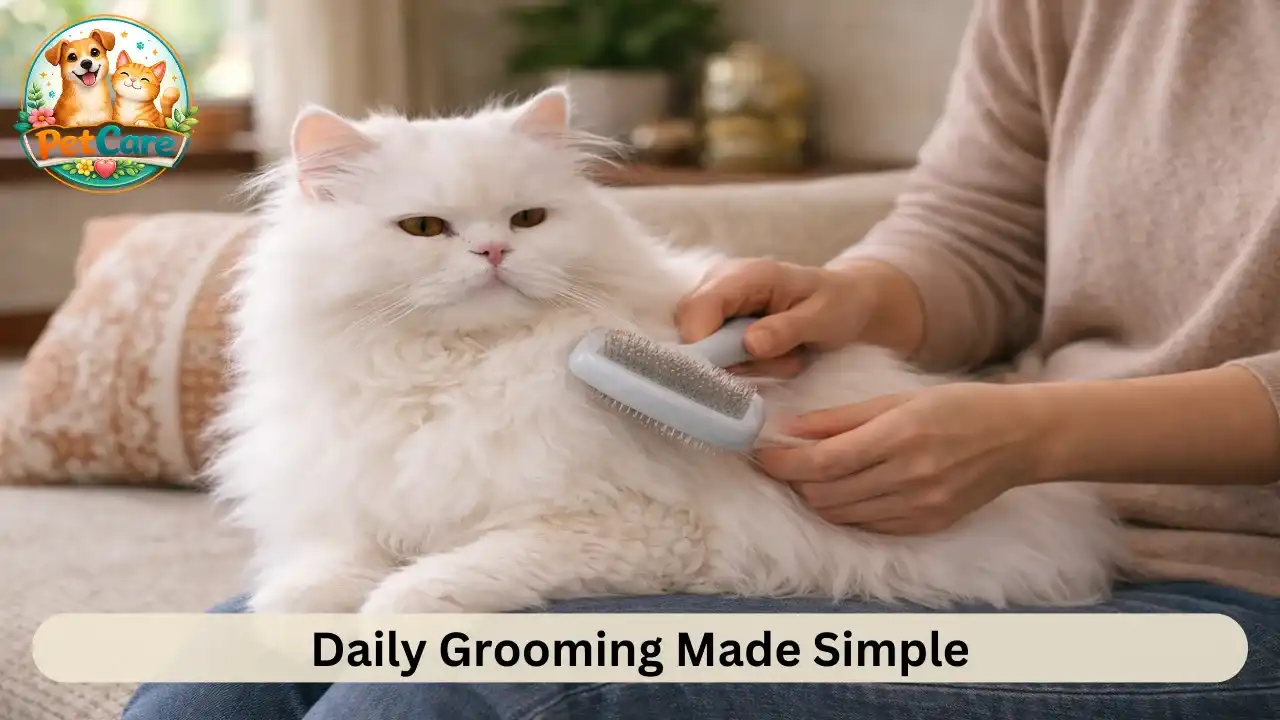
Close-up of gentle combing of a Persian cat’s thick fur during daily grooming.

Daily grooming sounds like a lot, but it doesn’t have to take hours. In most homes, 10–15 minutes a day is enough.

1. Brushing the Coat (Most Important Step)

Brushing is the backbone of any Persian cat grooming routine at home.

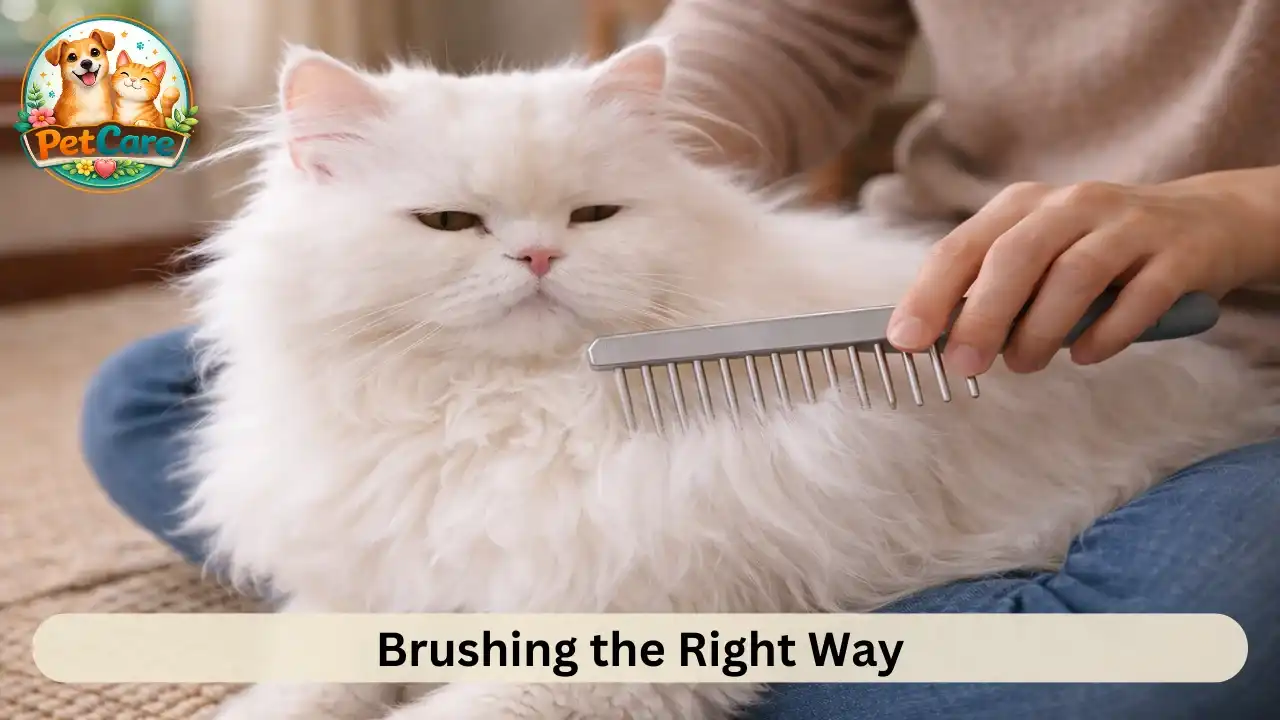
Use a wide-tooth comb first to gently open up the coat. Then follow with a soft slicker brush.

Focus on:

  • Behind the ears

  • Under the legs

  • Belly area

  • Base of the tail

These are common spots where mats form.

Tip: Always brush gently and slowly. Many Persian cats enjoy brushing when it’s done calmly.

2. Eye Cleaning Routine

Pet owner softly cleaning around a Persian cat’s eyes with a cotton pad at home.

Because of their flat faces, Persians often have watery eyes. In many households, owners notice mild tear stains around the eye area.

A simple Persian cat eye cleaning routine includes:

  • Using a soft cotton pad

  • Dipping it in clean lukewarm water

  • Gently wiping around the eyes

Do this daily to prevent stain buildup. Always use a fresh pad for each eye.

3. Face and Paw Wiping

Persian cats sometimes get food stuck around their mouth.

After meals:

  • Wipe the mouth gently with a damp cloth

  • Check paws for dirt or litter

This small habit keeps them clean and prevents unpleasant smell.

Weekly Grooming Tasks for Persian Cats

Some tasks don’t need to be done daily but should be part of your weekly Persian cat care at home routine.

1. Bathing (Only When Needed)
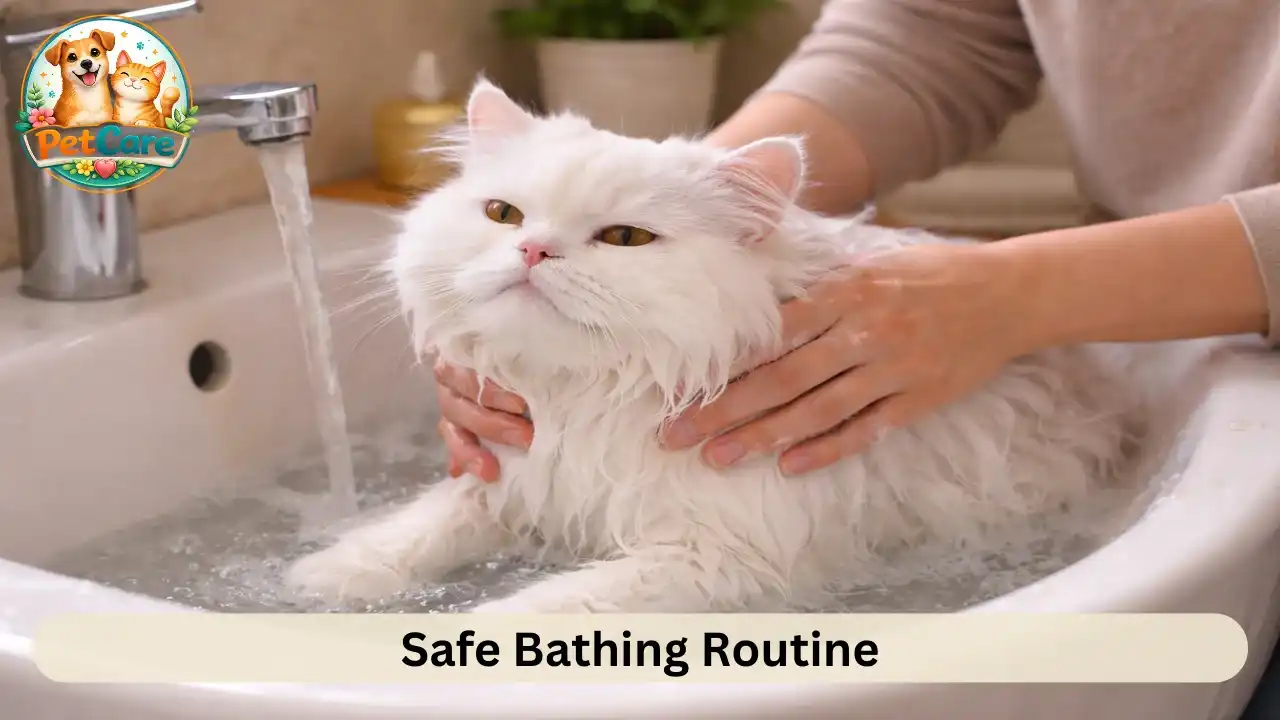
Persian cat being gently bathed in a home bathroom with calm handling.

Persian cats may need bathing more often than other breeds, especially in dusty climates.

In most homes, once every 3–4 weeks is enough.

Follow these steps:

  • Use lukewarm water

  • Use a mild cat shampoo

  • Rinse thoroughly

  • Dry completely using a towel

Never leave the coat damp. Moisture trapped in thick fur can cause discomfort.

2. Nail Trimming
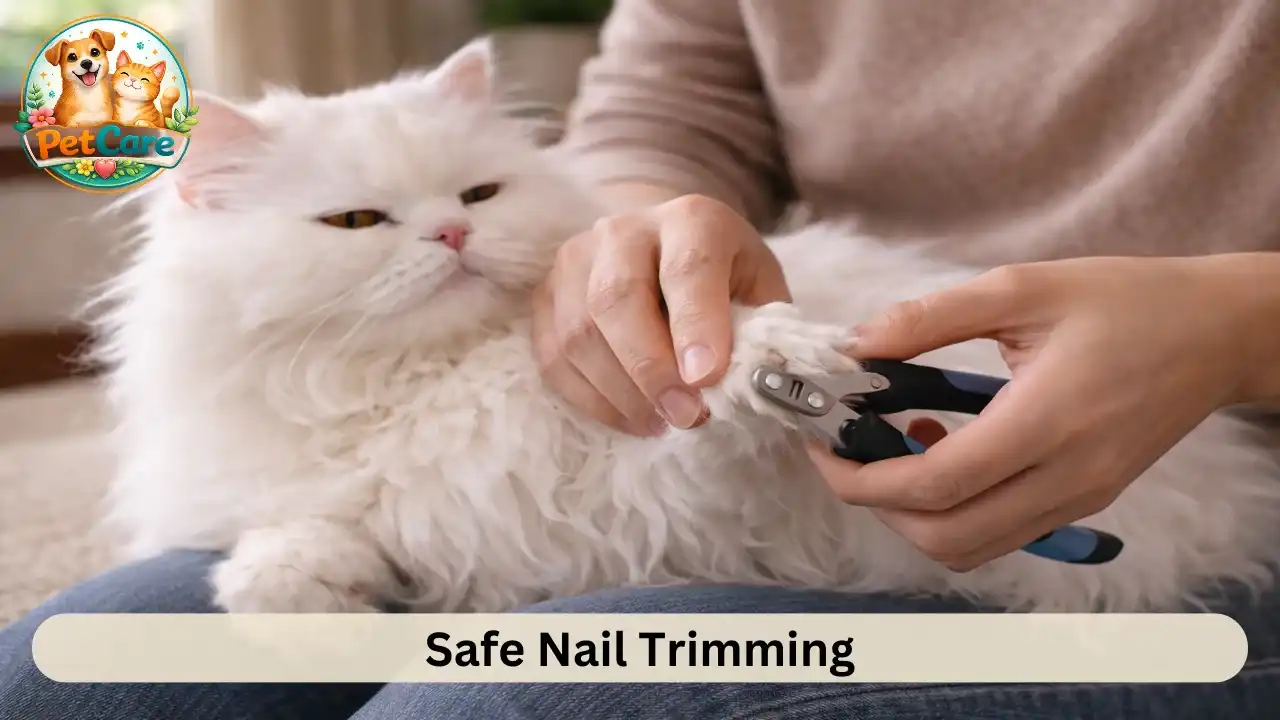
Owner trimming the tip of a Persian cat’s nails while the cat rests calmly.

Check nails once a week.

If they look sharp or too long:

  • Use a proper cat nail clipper

  • Trim only the tip

  • Avoid cutting too deep

If you’re unsure, trim very little. Many beginners prefer trimming slowly over multiple days.

3. Ear Cleaning

Check ears weekly.

If you see visible dirt:

  • Use a soft cotton pad

  • Gently wipe the outer area

Do not insert anything deep inside the ear.
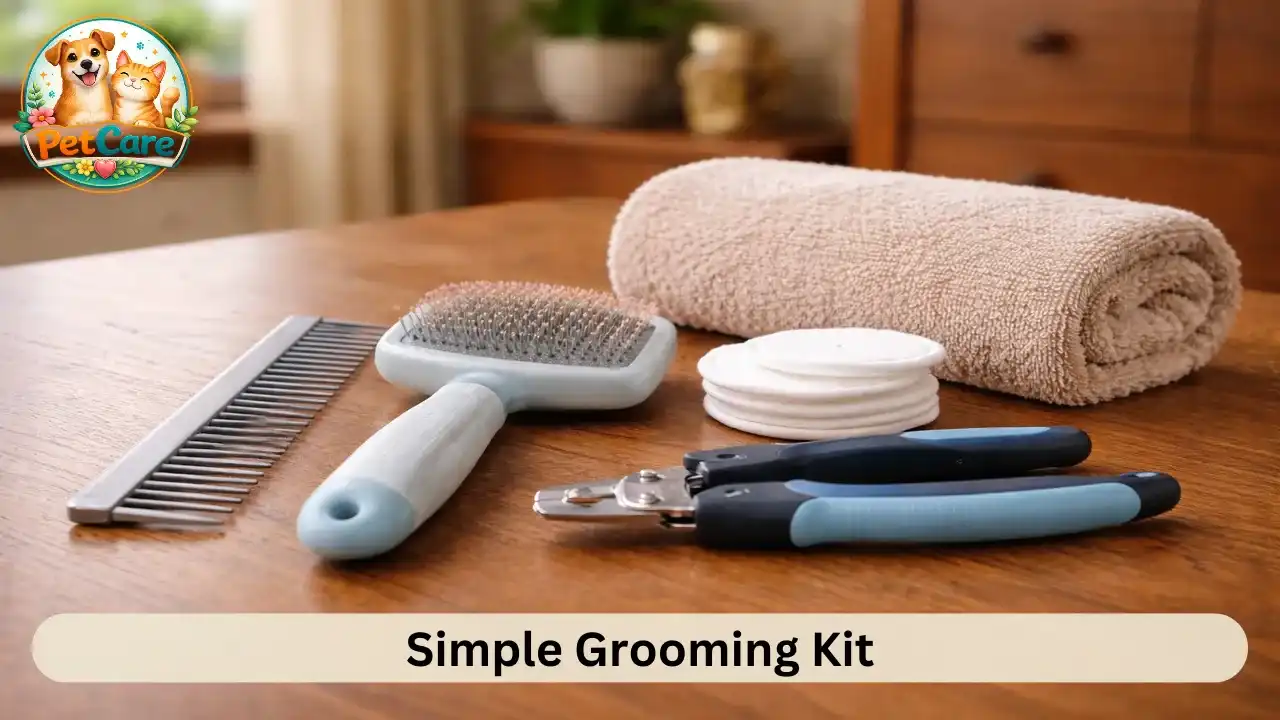
Tools You’ll Need for Grooming

Essential grooming tools arranged neatly on a table for caring for a Persian cat at home.

A simple home grooming kit for Persian cats can include:

  • Wide-tooth metal comb

  • Slicker brush

  • Soft cotton pads

  • Mild cat shampoo

  • Nail clipper

  • Small towel

You don’t need expensive tools. Just keep them clean and dedicated to your cat.

How to Groom a Persian Cat at Home Without Stress

Many beginners worry: What if my cat doesn’t sit still?

Here are some practical tips:

  • Start grooming from a young age

  • Keep sessions short

  • Groom after playtime (when they’re relaxed)

  • Speak softly

  • Reward with affection

In most cases, Persian cats adapt well if grooming becomes part of daily life.

If your cat becomes restless, stop and try again later. Forcing grooming can make them dislike it.

Common Beginner Mistakes

When following a Persian cat grooming routine at home, many new owners make small mistakes. These are common and easy to fix.

❌ Brushing Only the Top Layer

Persian fur is dense. Brushing only the surface doesn’t prevent matting underneath.

❌ Skipping Daily Grooming

Even missing a few days can cause tangles. Consistency matters more than perfection.

❌ Bathing Too Frequently

Over-bathing can dry the coat. Generally, once every few weeks is enough.

❌ Ignoring the Belly Area

Mats often form in hidden spots like under the legs or near the stomach.

Managing Shedding at Home

If you’re looking for Persian cat shedding control tips, brushing is again your best friend.

Daily brushing:

  • Removes loose hair

  • Reduces fur around the house

  • Keeps the coat airy

You can also:

  • Keep bedding clean

  • Vacuum regularly

  • Provide a balanced diet

Shedding is natural. The goal is to manage it, not stop it completely.

Grooming During Summer in India

In Indian weather, summer grooming becomes more important.

Helpful tips:

  • Keep the room well-ventilated

  • Brush daily to remove excess fur

  • Avoid shaving unless advised by a professional groomer

Many owners think shaving helps, but Persian fur also protects their skin. A proper Persian cat grooming routine at home is usually enough.

Creating a Calm Grooming Environment

Cats sense your mood.

Before grooming:

  • Sit in a quiet room

  • Turn off loud TV

  • Keep your tools ready

Consistency in time and place makes grooming feel familiar.

Over time, your cat may even start enjoying the attention.

Building a Routine That Works for You

Every home is different.

Some owners prefer grooming in the evening. Others do it in the morning before work.

What matters most is:

  • Regular brushing

  • Gentle handling

  • Observing your cat’s comfort

Your routine doesn’t have to be perfect. It just needs to be consistent.

Persian cat relaxing comfortably on owner’s lap after a calm grooming session.

FAQs About Persian cat grooming routine at home

1. How often should I brush my Persian cat?

Generally, daily brushing is recommended. It helps prevent tangles and reduces shedding.

2. Can I skip bathing if I brush daily?

In many cases, yes. If your cat stays indoors and remains clean, bathing can be less frequent.

3. What is the best time to groom a Persian cat?

After playtime or when your cat is naturally relaxed works best.

4. Do Persian cats need professional grooming?

Some owners choose professional grooming occasionally, but many manage grooming completely at home with patience and the right tools.

A Few Honest Thoughts Before You Go

A well-planned Persian cat grooming routine at home keeps your cat comfortable, clean, and confident. It may feel like extra work in the beginning, but once it becomes a habit, it’s just a few minutes a day. Grooming is also bonding time. Your Persian will begin to trust your touch and enjoy the calm moments you spend together. When I first started, I made small mistakes — brushing too quickly, trimming nails with shaky hands — but over time I understood that patience matters more than perfection. I’ve personally seen how regular brushing prevents painful mats and how a gentle eye wipe can instantly make them more comfortable. After living with Persian cats, I can honestly say that consistency is everything — even 5 quiet minutes daily makes a bigger difference than one long grooming session once in a while. Start small. Stay patient. And remember — in most homes, simple daily care makes the biggest difference. If you treat grooming as a calm, caring routine instead of a task, your cat will slowly start trusting you more — and that trust is the real reward.