
How to Stop Puppy Biting at Home

How to Stop Puppy Biting at Home

Bringing a puppy home is one of the happiest moments for any pet lover. Those tiny paws, playful jumps, and curious eyes can instantly brighten your day. But along with all that cuteness, one common challenge most new owners face is biting.

If you’re wondering how to stop puppy biting at home, you’re definitely not alone. In most homes, puppies go through a biting phase as they explore the world. The good news is—this behavior is normal, and with the right approach, it can be managed calmly and effectively.

Let’s understand why puppies bite and how you can gently train them to behave better without stress or confusion.

Why Do Puppies Bite?

Young puppy chewing a soft toy while sitting comfortably on the floor at home

Before correcting the behavior, it’s important to know the reason behind it. Puppies don’t bite to harm—they bite because it’s their natural way of learning.

Some common reasons include:

  • Teething discomfort – Just like babies, puppies chew to soothe their gums
  • Play behavior – They use their mouth while playing with siblings
  • Curiosity – Exploring objects, hands, and surroundings
  • Excess energy – No proper outlet leads to nipping
  • Attention-seeking – Sometimes biting gets your reaction

Understanding this helps you respond calmly instead of reacting with frustration.

How to Stop Puppy Biting at Home (Step-by-Step)

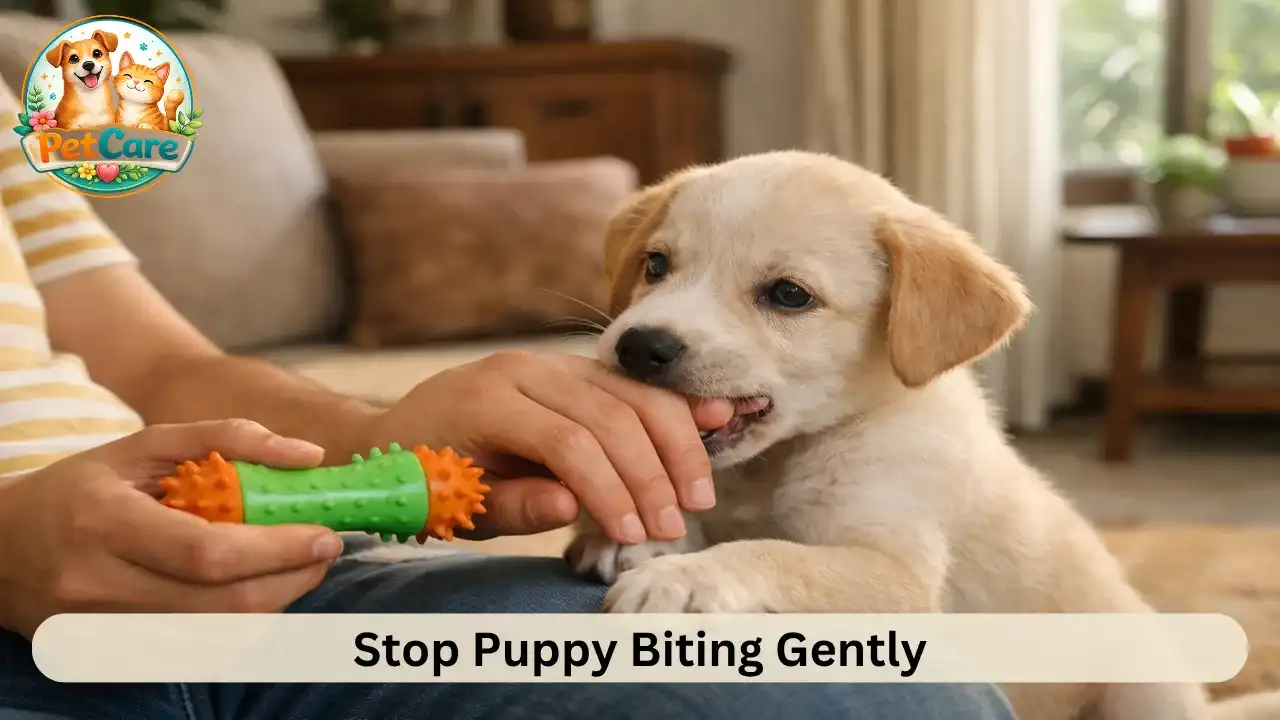
Pet owner guiding puppy to chew a toy instead of biting hands during training

Training a puppy takes patience. There’s no overnight fix, but small consistent steps make a big difference.

1. Teach Bite Inhibition Early

One of the best ways to stop puppy biting is to teach them how much pressure is acceptable.

When your puppy bites too hard:

  • Say a firm but calm “No” or “Ouch”
  • Immediately stop playing
  • Withdraw your hand slowly

In many cases, puppies learn that biting ends the fun. Over time, they reduce their bite strength.

2. Redirect to Chew Toys
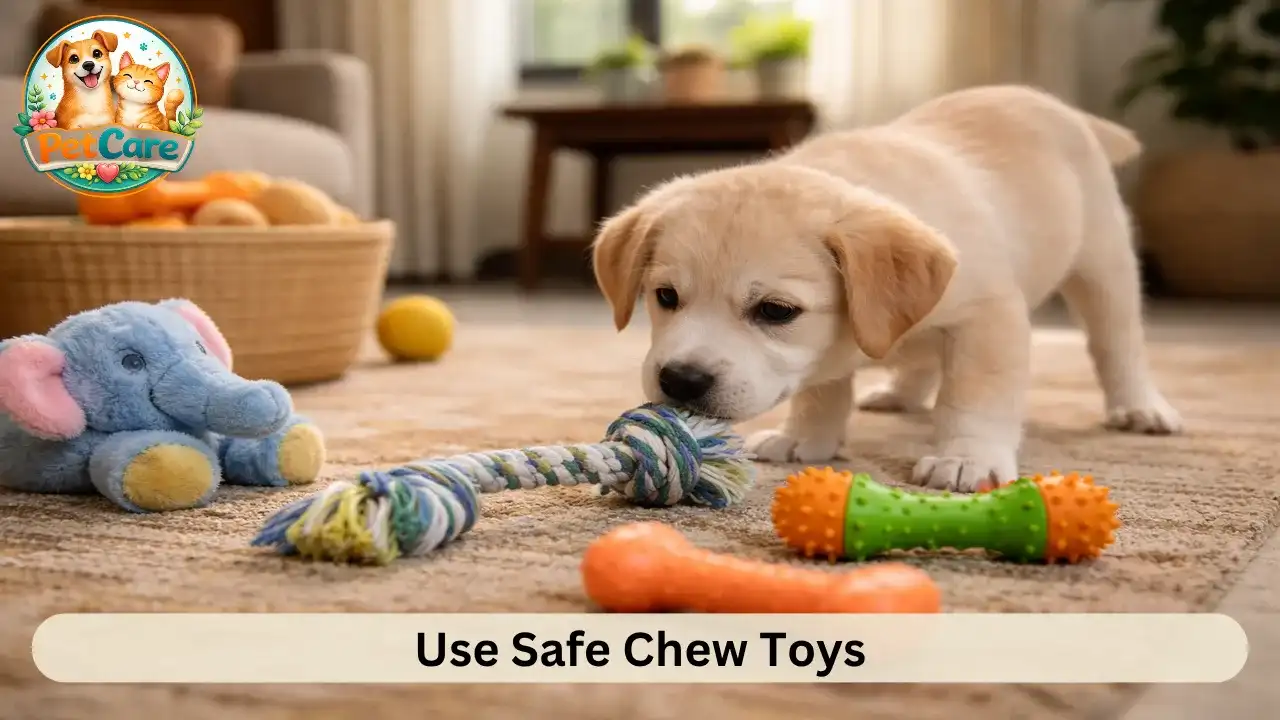
Puppy selecting a chew toy from a few options placed on the floor at home

Puppies need something to chew—it’s natural. Instead of stopping the behavior completely, redirect it.

Keep safe chew items handy:

  • Soft chew toys
  • Rubber toys
  • Rope toys

Whenever your puppy tries to bite your hands, gently replace your hand with a toy. This method works well for puppy teething biting solutions at home.

3. Avoid Using Hands as Toys

A common beginner mistake is encouraging playful biting during fun time.

Avoid:

  • Wrestling with hands
  • Letting the puppy chew fingers
  • Teasing movements near the face

In most homes, this confuses puppies. They start thinking hands are acceptable chew objects.

4. Stay Calm and Consistent

Consistency matters more than strictness.

If one family member allows biting and another doesn’t, the puppy gets confused. Make sure everyone follows the same rules.

Also:

  • Don’t shout or scare the puppy
  • Avoid sudden aggressive reactions
  • Stay calm even when bites happen

This builds trust while teaching boundaries.

5. Use Short Time-Outs

If biting becomes too frequent, give a short break.

  • Stop interaction immediately
  • Step away for 20–30 seconds
  • Ignore the puppy calmly

This method is commonly used in puppy behavior training at home and helps them understand limits without fear.

6. Provide Enough Physical and Mental Activity

A bored puppy is more likely to bite.

Make sure your puppy gets:

  • Daily playtime
  • Short walks (as per age and safety)
  • Simple training sessions
  • Puzzle toys or activities

For many pet owners, increasing activity levels naturally reduces biting.

7. Reward Gentle Behavior

Positive reinforcement works better than punishment.

Whenever your puppy:

  • Plays without biting
  • Licks instead of biting
  • Responds calmly

Reward them with:

  • Praise (“Good boy/girl”)
  • Gentle petting
  • Occasional treats

This helps in training puppy not to bite hands naturally.
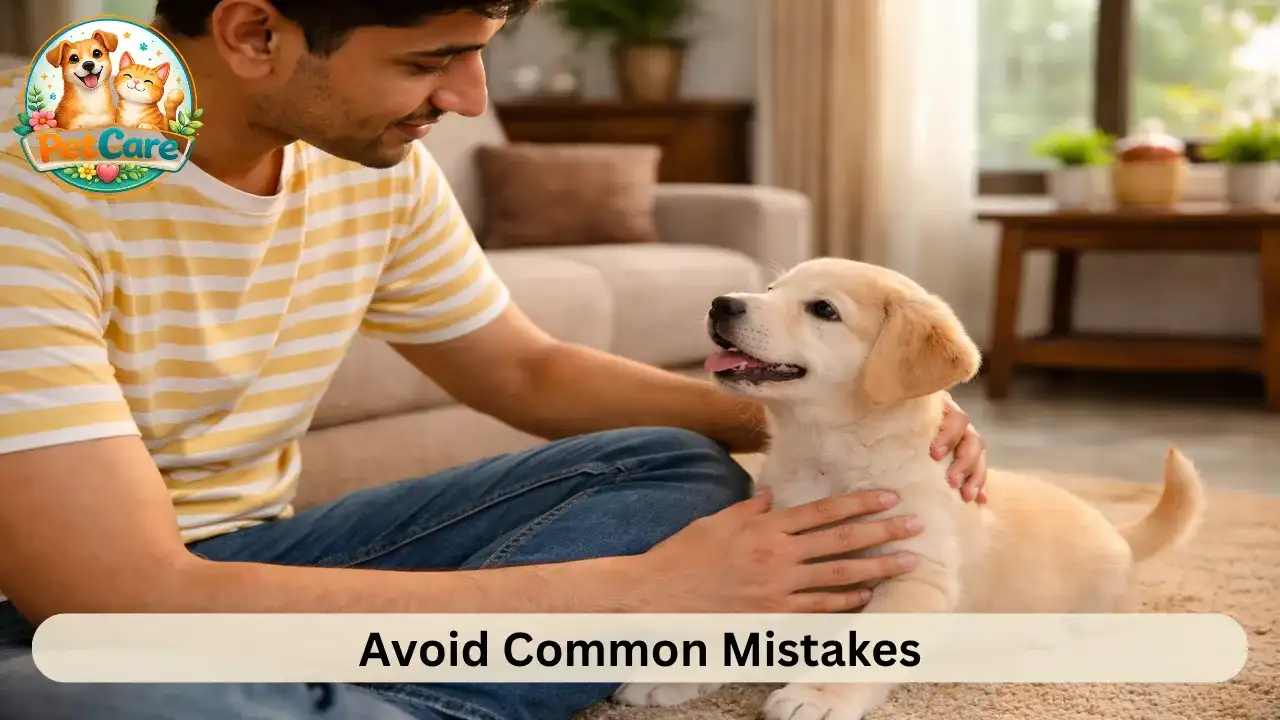
Common Mistakes to Avoid

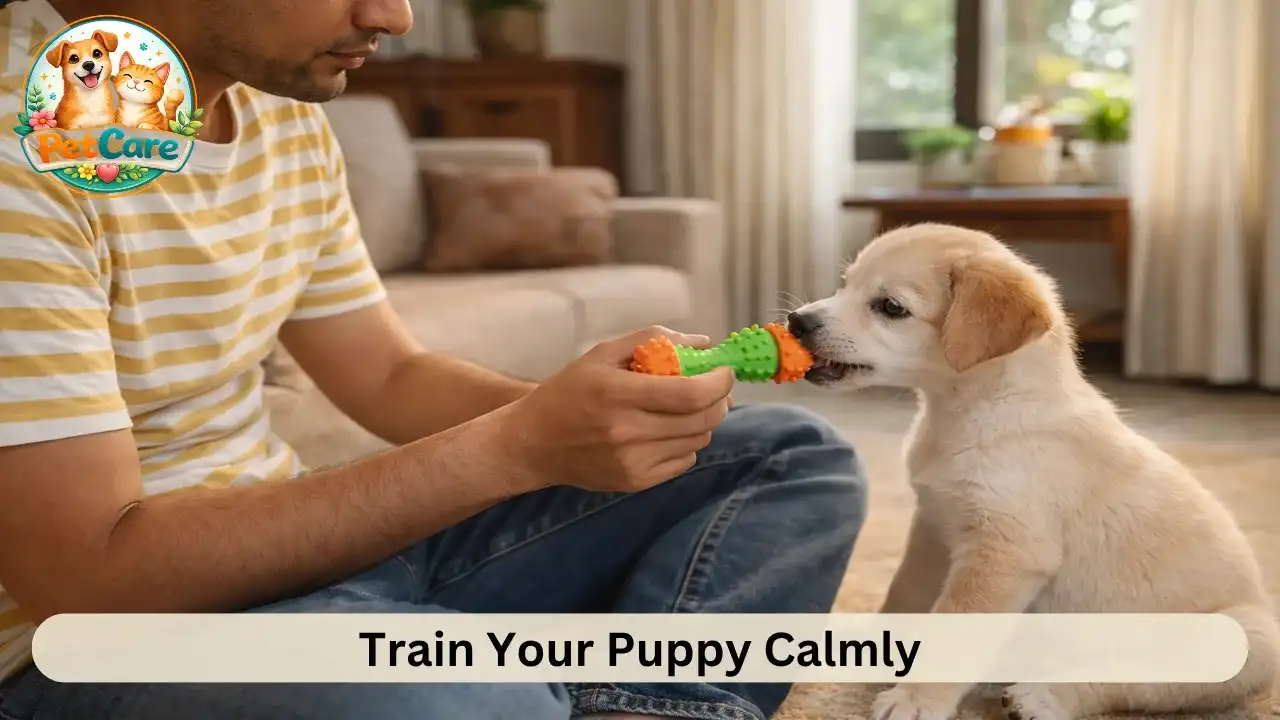
Owner sitting calmly with puppy showing gentle interaction without rough play

Even with good intentions, beginners sometimes make small mistakes that slow down progress.

❌ Encouraging rough play

This teaches puppies that biting is acceptable during excitement.

❌ Using punishment

Harsh reactions can make puppies fearful or more aggressive.

❌ Inconsistency

Different rules at different times confuse the puppy.

❌ Ignoring early signs

Small nips can become stronger bites if not corrected early.

❌ Lack of routine

Irregular feeding, play, and rest times affect behavior.

Avoiding these mistakes makes how to control puppy biting indoors much easier.

How Long Does It Take to Stop Puppy Biting?

This depends on the puppy’s age, breed, and environment.

Generally:

  • Mild improvement: within 1–2 weeks
  • Noticeable change: 3–4 weeks
  • Strong habit control: 1–2 months

In most homes, consistency is the key factor. Puppies learn faster when training is gentle but regular.

Simple Daily Routine to Reduce Biting

A structured routine helps a lot in managing behavior.

Morning:

  • Light play session
  • Short training (5–10 minutes)

Afternoon:

  • Rest time
  • Chew toy access

Evening:

  • Active play session
  • Interaction with family

Night:

  • Calm environment
  • No overstimulation

This routine supports puppy biting prevention tips for beginners.

When Is Puppy Biting a Concern?

Normal puppy biting is playful and controlled. But you should observe carefully if:

  • The puppy shows excessive aggression
  • Growling becomes frequent during normal interaction
  • Biting causes frequent injuries

In such cases, it’s better to focus more on training and structured routines. Most issues improve with proper guidance and patience.

FAQs(Frequently asked questions)

1. Is puppy biting normal?

Yes, it is completely normal. Puppies bite during teething and play. It’s part of their natural development.

2. Should I ignore my puppy when it bites?

Yes, briefly ignoring can help. It shows the puppy that biting stops attention and play.


3. Can I train my puppy not to bite without punishment?

Absolutely. Positive reinforcement and redirection are commonly effective methods.


4. Why does my puppy bite more in the evening?

Many puppies become more energetic in the evening. Extra playtime during this period can help reduce biting.

A Few Honest Words Before You Go

Learning how to stop puppy biting at home is more about understanding than controlling. Puppies are not trying to misbehave they are simply growing and learning.With patience, consistency, and the right techniques, you can guide your puppy toward better habits. In most cases, gentle correction, proper play, and positive reinforcement are enough to shape their behavior.Enjoy this phase too it is temporary, and your puppy will soon grow into a well-behaved companion.