How to Train a Parrot to Talk
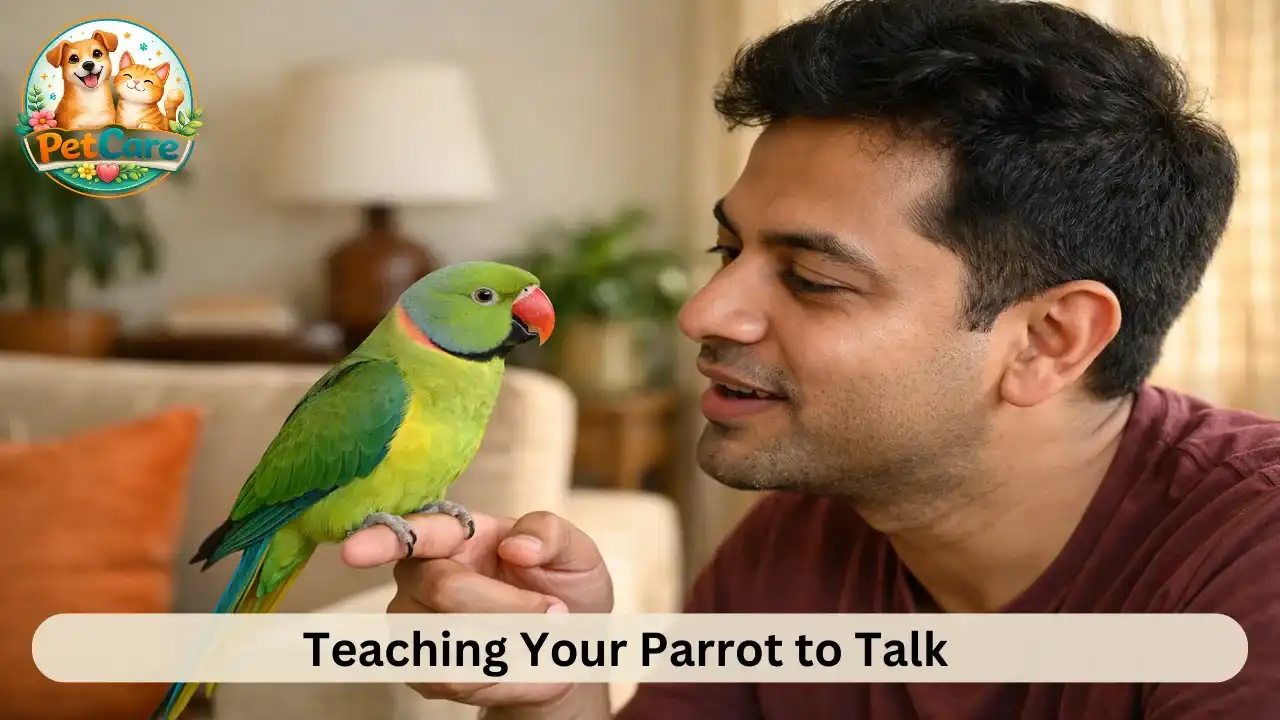
Parrots are among the most fascinating pets you can keep at home. Their intelligence, playful personality, and ability to mimic sounds make them very special companions. In many Indian homes, people keep parrots not only for their colorful appearance but also for their entertaining talking ability.
However, beginners often assume that parrots will automatically start talking after a few days. In reality, learning how to train a parrot to talk (basic bonding tips) requires patience, daily interaction, and a calm environment. Talking is not just a trick for parrots—it usually develops through trust and bonding with their owner.
If you are a first-time parrot owner, the good news is that simple daily habits can help encourage speech. In this guide, we will go through practical and beginner-friendly tips that many pet owners commonly use when teaching their parrots to talk.
Understanding How Parrots Learn to Talk
Before trying to teach words, it helps to understand how parrots actually learn speech.
Parrots do not speak in the same way humans do. They imitate sounds they hear repeatedly. In homes, this usually includes voices, whistles, doorbells, and common household sounds.
In most homes, parrots begin copying the sounds they hear the most. That is why owners who regularly talk to their birds often see better results.
Some important points to remember:
Not every parrot will talk
Some species learn faster than others
Younger birds usually learn more easily
Bonding plays a big role in speech learning
For many pet owners, building trust with the bird is the first step before expecting any talking behavior.
Building Trust Before Speech Training
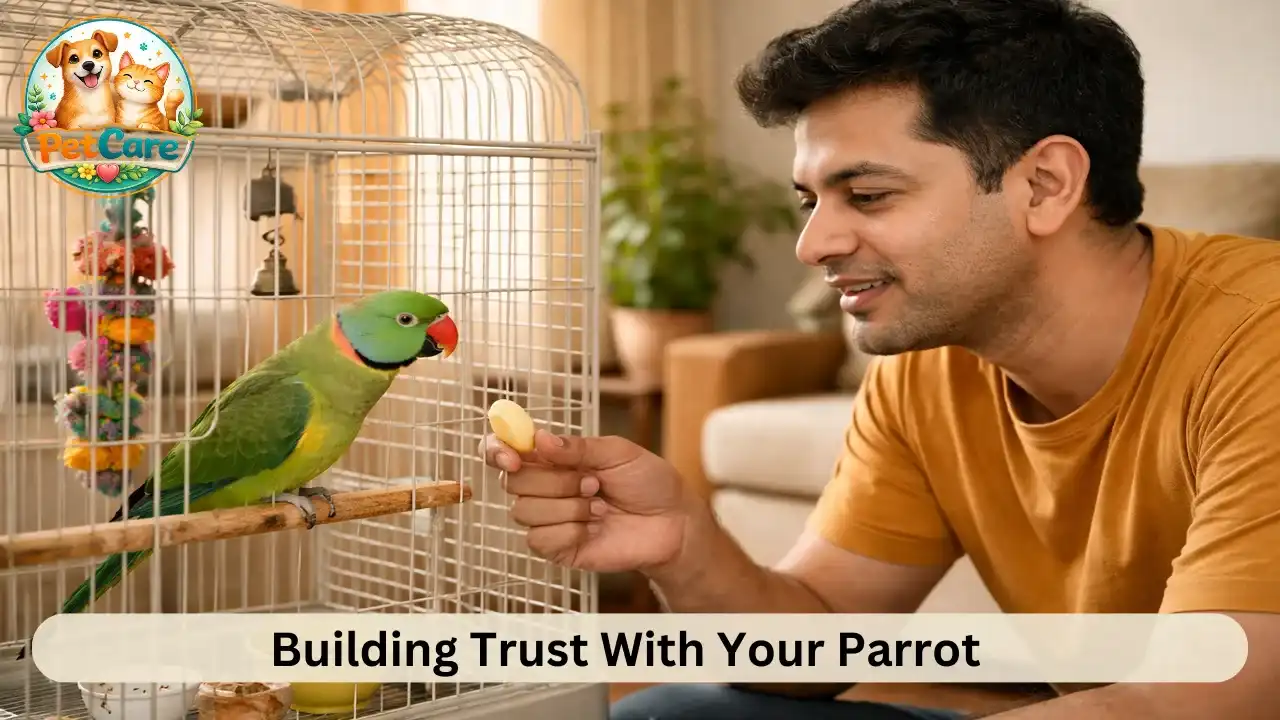
When learning how to train a parrot to talk (basic bonding tips), bonding should always come first.
A parrot that feels comfortable around you is far more likely to mimic your voice. If the bird is scared or stressed, it may remain quiet most of the time.
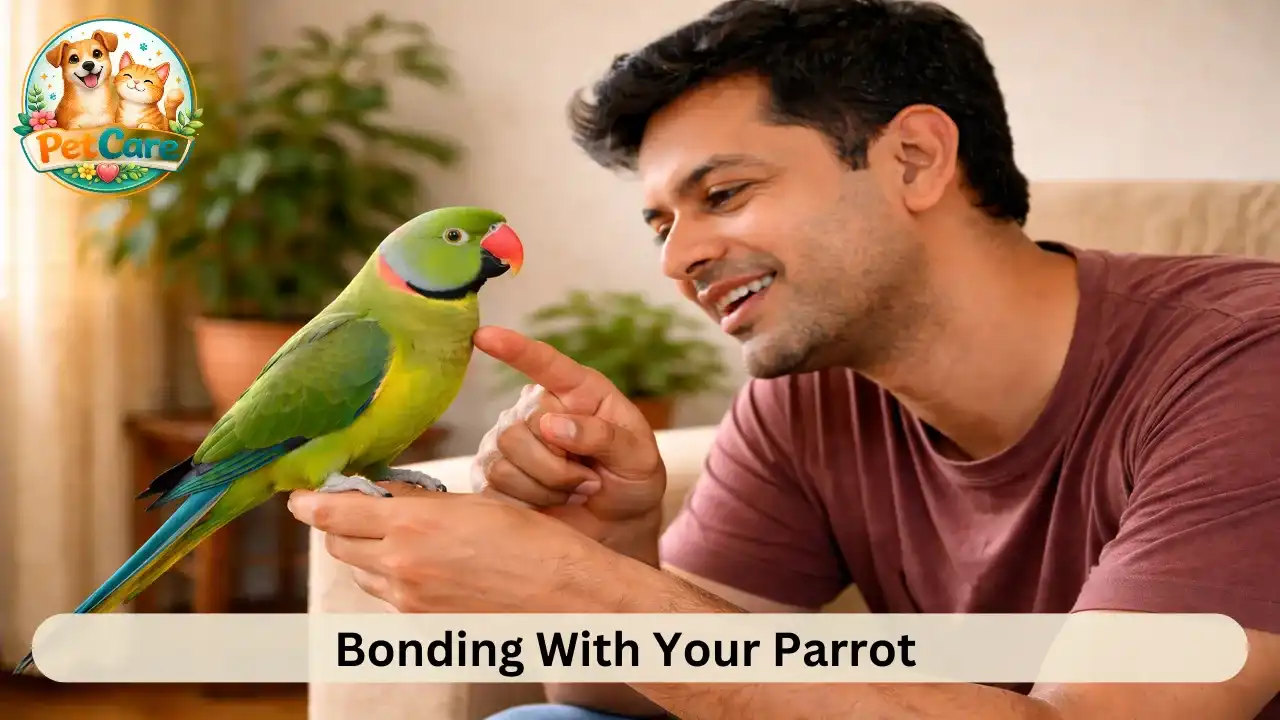
Spend time near your parrot every day so it becomes familiar with your presence.
Simple bonding activities include:
Sitting near the cage and talking softly
Offering fresh food and water calmly
Allowing the bird to observe daily household activity
Using a gentle and consistent tone when speaking
In many homes, parrots slowly become curious about their owners. Once this curiosity develops, they begin paying closer attention to your voice.
Start With Simple Words
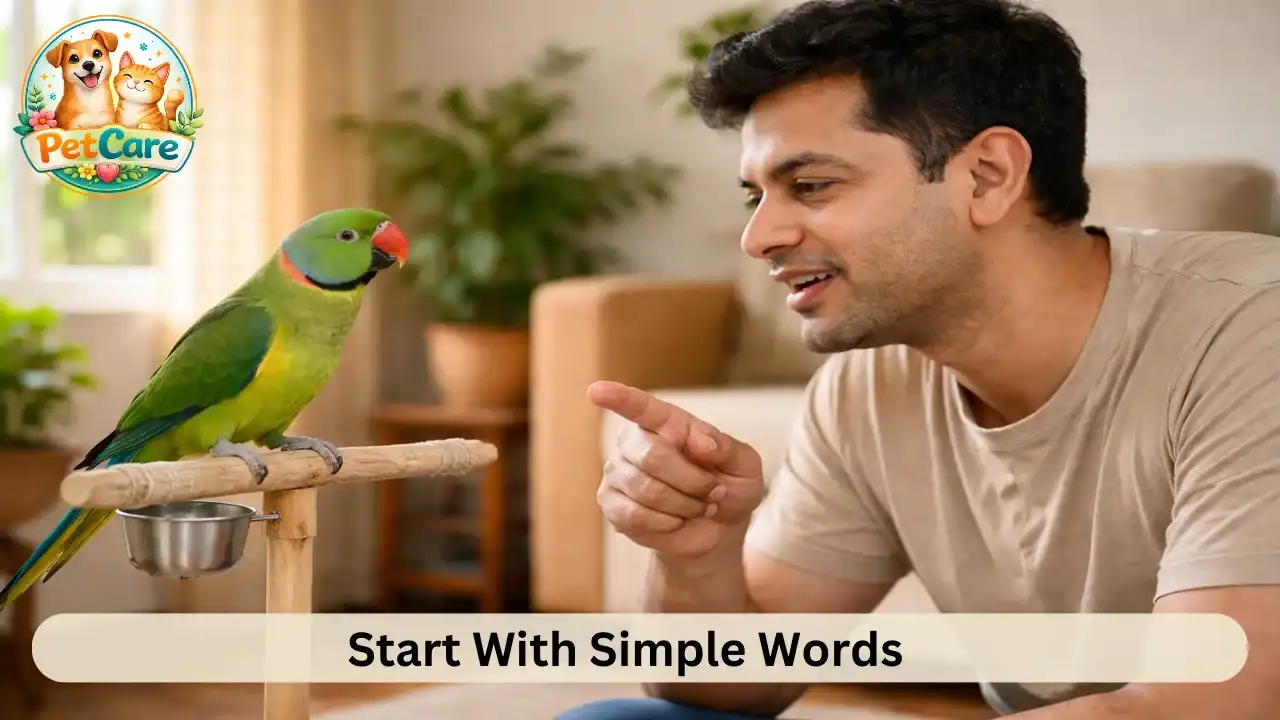
When teaching a parrot to speak, simple words work best.
Choose short and clear words that are easy to repeat. Many beginners start with greetings or the bird’s name.
Common beginner words include:
Hello
Hi
Good morning
Bye
The bird’s name
Speak the word clearly and repeat it several times during the day. Consistency is more important than long training sessions.
For example, saying “Hello” every time you approach the cage helps the bird associate that sound with your presence.
This approach is commonly used in parrot speech training for beginners.
Talk to Your Parrot Throughout the Day
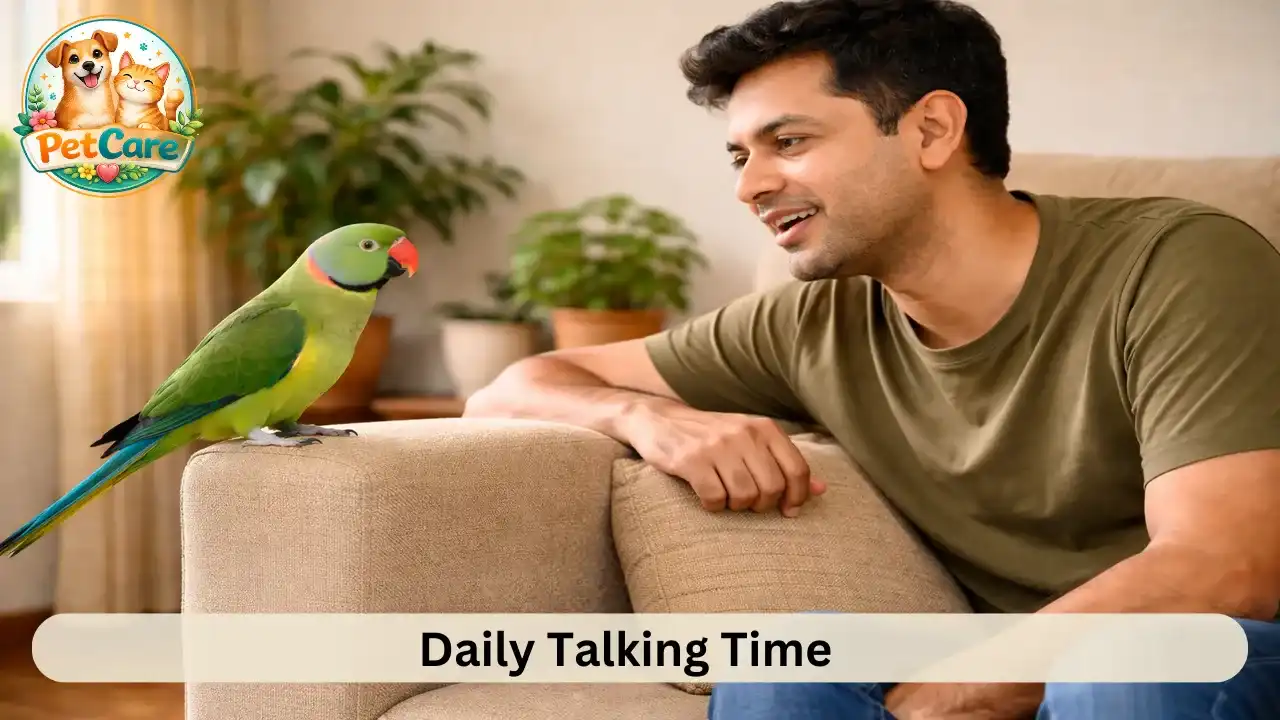
Parrots learn speech through repetition. The more they hear your voice, the more likely they are to mimic it.
You do not need special training sessions all the time. Simply talk to your bird during normal activities.
Examples include:
Greeting your parrot in the morning
Saying the bird’s name while feeding
Talking softly while cleaning the cage
Repeating a word during playtime
For many pet owners, these small interactions naturally encourage parrots to copy sounds.
This is also one of the most effective ways to encourage parrots to mimic words.
Use Positive Attention and Enthusiasm
Parrots are social birds and often enjoy attention from their owners.
When your bird makes a sound that resembles a word, respond positively. Even if the sound is not clear, showing excitement encourages the bird to repeat it.
You can:
Smile and respond with the same word
Speak in a cheerful tone
Repeat the word again slowly
This creates a positive connection between making sounds and receiving attention.
Over time, many parrots repeat the sound more clearly.
Choose the Right Time for Training
Timing can influence how well a parrot pays attention.
Parrots are generally more alert during certain parts of the day, especially in the morning or early evening.
Good times for short speech practice include:
Morning greeting time
During feeding routines
Quiet evening interaction
Avoid trying to train when the bird is sleepy or distracted.
Short and relaxed practice sessions are usually more effective than long ones.
Reduce Background Noise During Practice
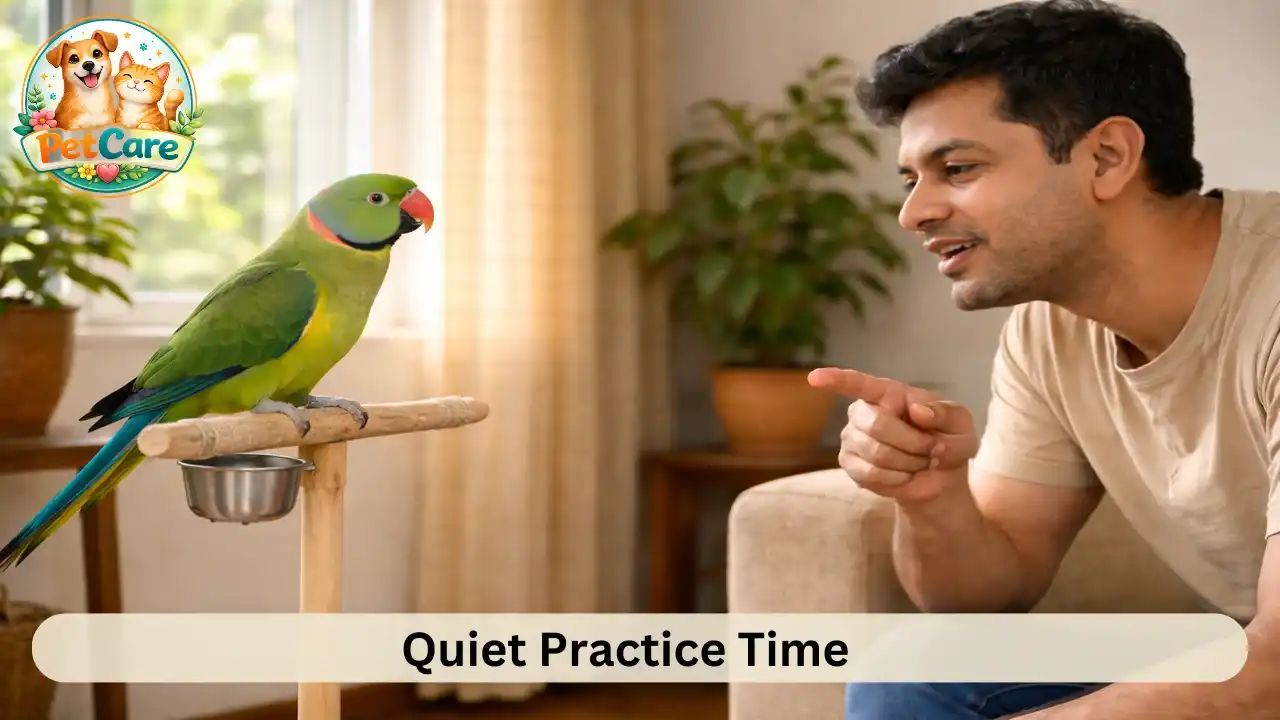
Parrots often copy the sounds they hear most clearly.
If the television, music, or loud household noise is always present, your bird may imitate those sounds instead of words.
For clearer speech learning:
Practice in a quiet room
Reduce background noise
Speak clearly and slowly
In many homes, parrots begin mimicking sounds like phone ringtones or whistles simply because they hear them repeatedly.
A calm environment helps the bird focus on your voice.
Encourage Play and Interaction
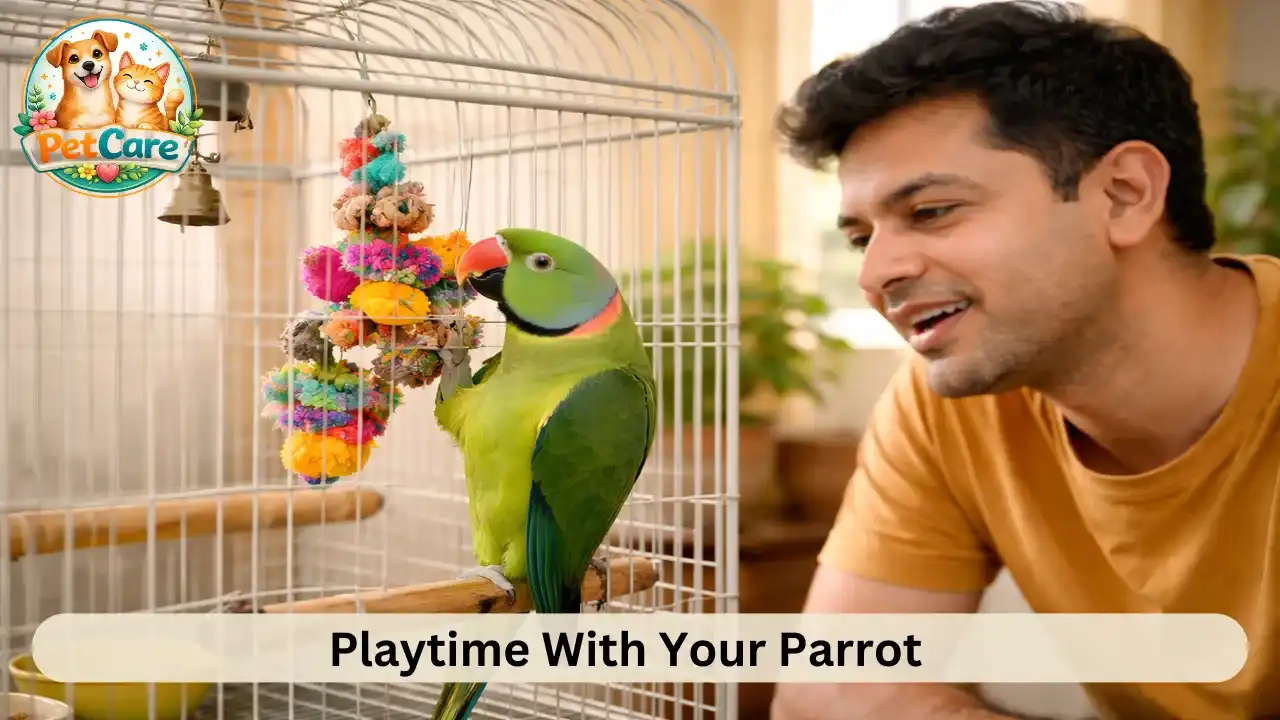
Speech training works best when combined with regular interaction.
A bored parrot may become quiet or less interested in learning sounds.
Interactive activities help strengthen your bond and keep the bird mentally active.
Some simple ideas include:
Talking during gentle playtime
Offering safe toys inside the cage
Allowing supervised time outside the cage
Whistling or making playful sounds
Many pet owners notice that playful parrots are more likely to experiment with new sounds.
Be Patient With the Process
One of the biggest lessons in how to train a parrot to talk (basic bonding tips) is patience.
Some parrots begin mimicking words within weeks, while others may take months. A few may never talk clearly at all.
Factors that influence speech learning include:
The bird’s personality
Daily interaction with the owner
Age of the parrot
Environment and routine
Instead of focusing only on talking, enjoy the bonding process with your bird. Even parrots that do not speak can still be wonderful companions.
Common Beginner Mistakes When Training a Parrot
Many new parrot owners unintentionally slow down the learning process. Avoiding a few common mistakes can make a big difference.
Common mistakes include:
1.Expecting quick results:
Speech learning usually takes time. Rushing the process can lead to frustration.
2.Using too many words at once:
Stick to one or two words in the beginning.
3.Inconsistent interaction:
Parrots learn best when they hear the same words daily.
4.Ignoring bonding time:
Without trust, parrots may stay quiet.
5.Training in noisy environments:
Loud surroundings make it harder for birds to focus on speech sounds.
Keeping training simple and relaxed usually works best for beginners.
FAQs On How to Train a Parrot to Talk
In many homes, parrots may begin mimicking sounds within a few weeks or months. However, the timing varies depending on the bird’s personality and interaction with the owner.
Some species are commonly known for stronger talking ability, but individual birds can differ. Consistent interaction and bonding usually matter more than the species alone.
Yes, older parrots can still learn new sounds and words. However, younger birds often learn faster because they are more curious and adaptable.
Yes. Not every parrot learns speech. Many parrots still develop strong bonds with their owners through play, sounds, and interaction.
Final Thoughts
Learning how to train a parrot to talk (basic bonding tips) is less about strict training and more about building a friendly relationship with your bird.You have to spend time with your bird.Parrots naturally enjoy social interaction, and many begin mimicking sounds simply by spending time with their owners. Talking to your parrot regularly, repeating simple words, and creating a calm environment can gradually encourage speech.For many pet owners, the most rewarding part of keeping a parrot is the daily interaction and companionship.It is fun to play with your own Parrot. Whether your bird learns several words or just a few sounds, the bond you build together is what truly makes the experience special.