Ideal Cage Setup for Parrots in India
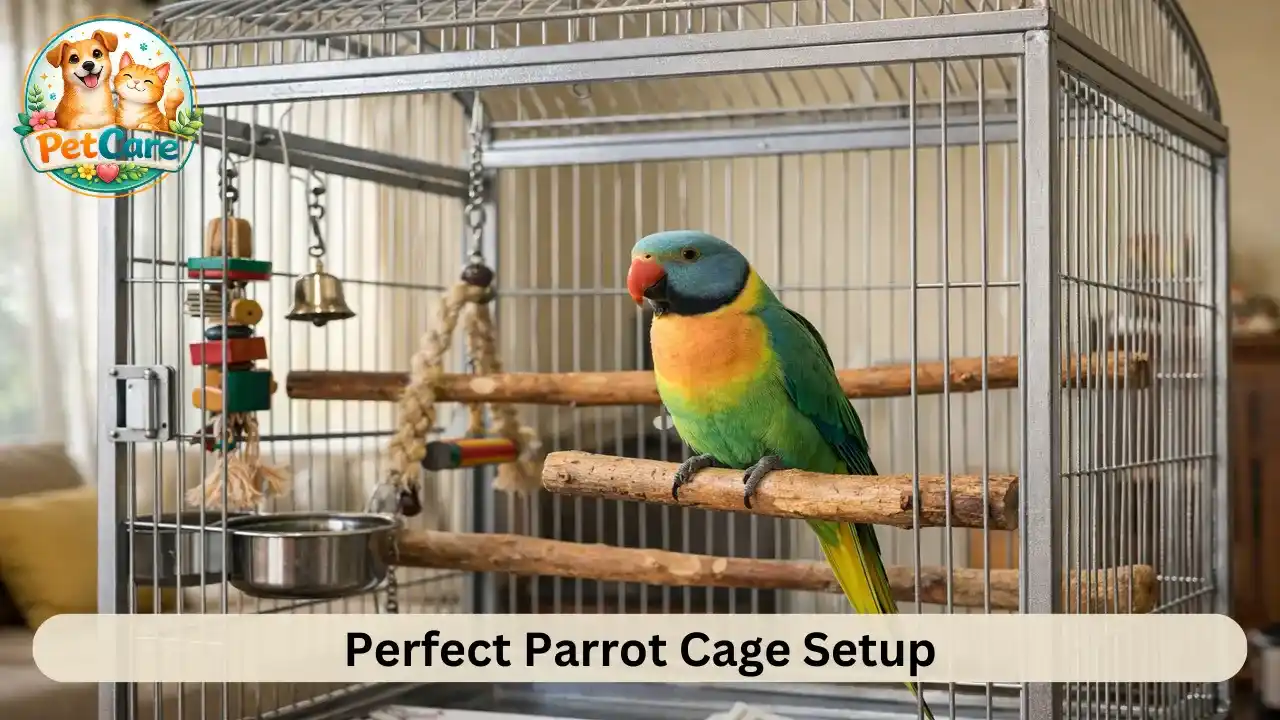
Bringing home a parrot is exciting. Their playful nature, intelligence, and ability to bond closely with family members make them special companions. But before you focus on teaching them to talk or picking the right food, one thing matters the most — creating the Ideal cage setup for parrots in India.
In most Indian homes, space, weather conditions, and daily routine all influence how we arrange a parrot’s living area. Over the years, I’ve seen that a well-planned cage setup makes parrots feel secure, active, and mentally stimulated. It doesn’t have to be fancy or expensive — just thoughtful and practical.
Let’s break it down step by step so even first-time bird parents can set things up properly.
Why the Right Cage Setup Matters
Parrots spend a good part of their day inside their cage, especially in apartments or busy households. So the cage is not just a container — it’s their personal space.
A proper parrot cage setup for Indian homes should:
-
Provide enough room to move and stretch
-
Allow safe climbing and perching
-
Be easy to clean
-
Protect from extreme weather
-
Encourage natural behavior
When the setup feels comfortable, parrots are generally calmer and more engaged.
Choosing the Right Cage Size and Material
1. Go Bigger Than You Think
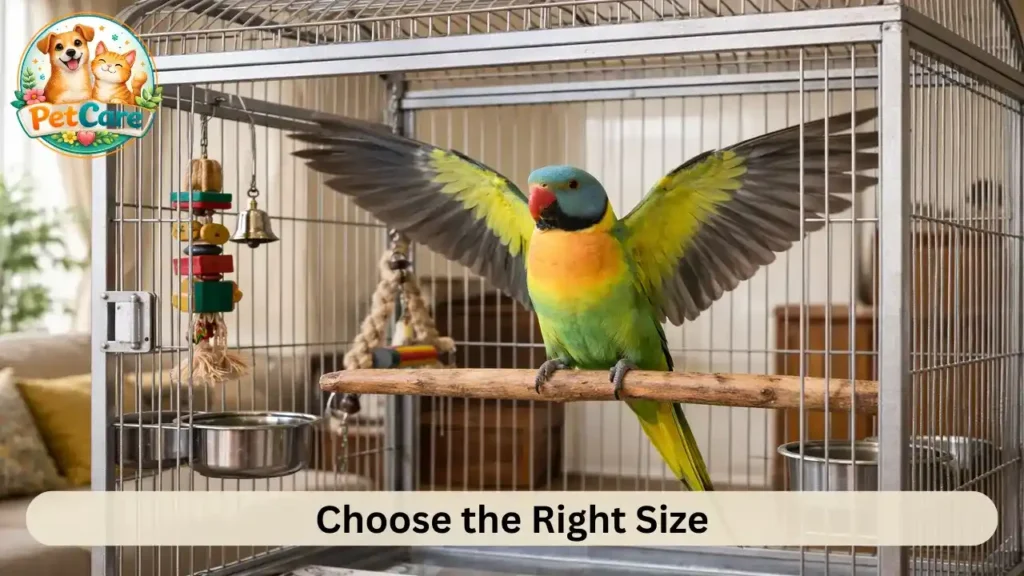
One common beginner mistake is buying a cage that is too small. Even small parrots like budgies or lovebirds need space to hop and stretch their wings.
As a simple rule:
The cage should be wide enough for the bird to fully spread its wings without touching the bars.
Longer cages are usually better than tall narrow ones.
This is especially important when designing the Ideal cage setup for parrots in India, where many birds stay indoors most of the time.
2. Safe Cage Material
In Indian markets, you’ll commonly find:
Powder-coated metal cages
Stainless steel cages
Stainless steel is more durable and easier to clean, though slightly costlier. Powder-coated cages are fine as long as the coating doesn’t peel.
Avoid rusty or poorly finished cages. Sharp edges can be unsafe.
Best Location for the Cage in Indian Homes
Avoid Direct Sunlight
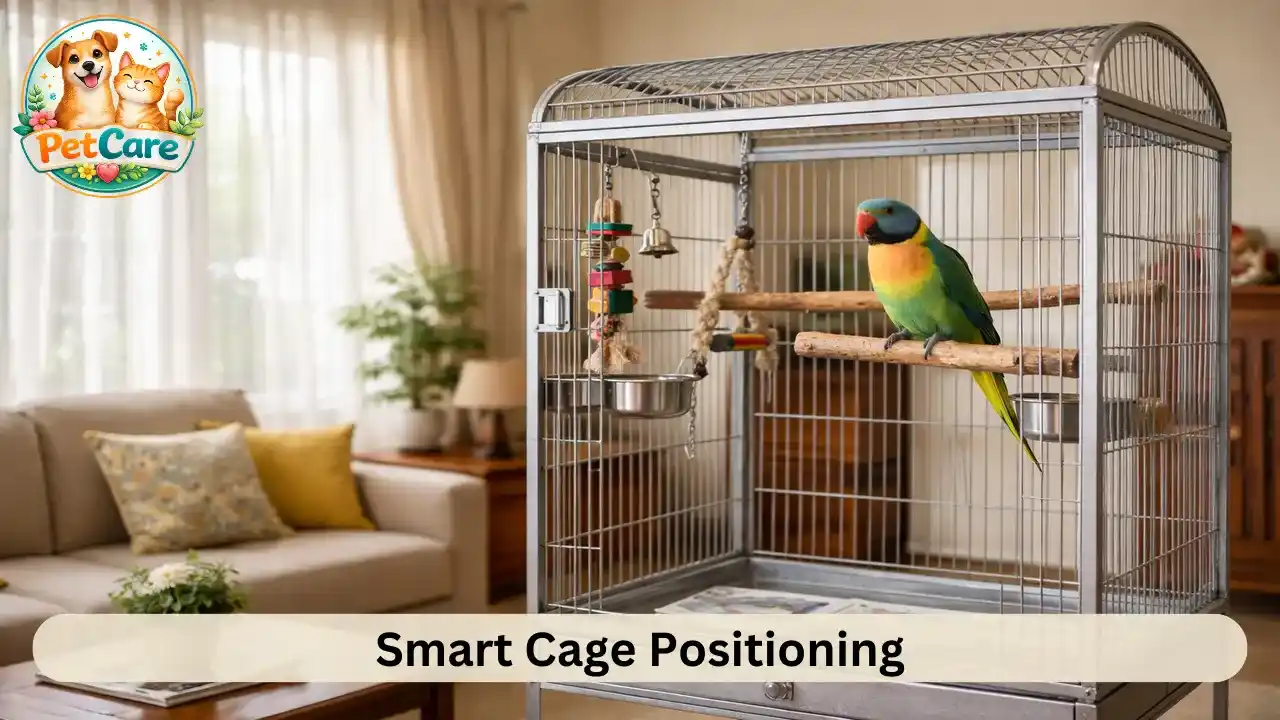
India has strong sunlight in most regions. While parrots enjoy some natural light, direct afternoon sunlight can overheat the cage.
Place the cage:
Near a window with filtered sunlight
In a well-ventilated room
Away from kitchen smoke and cooking fumes
Keep Them Part of Family Life
Parrots are social birds. In most homes, placing the cage in the living room corner works well — somewhere they can see family activity but not be in constant disturbance.
Avoid keeping the cage isolated in a balcony all day.
Proper Perch Setup for Parrots
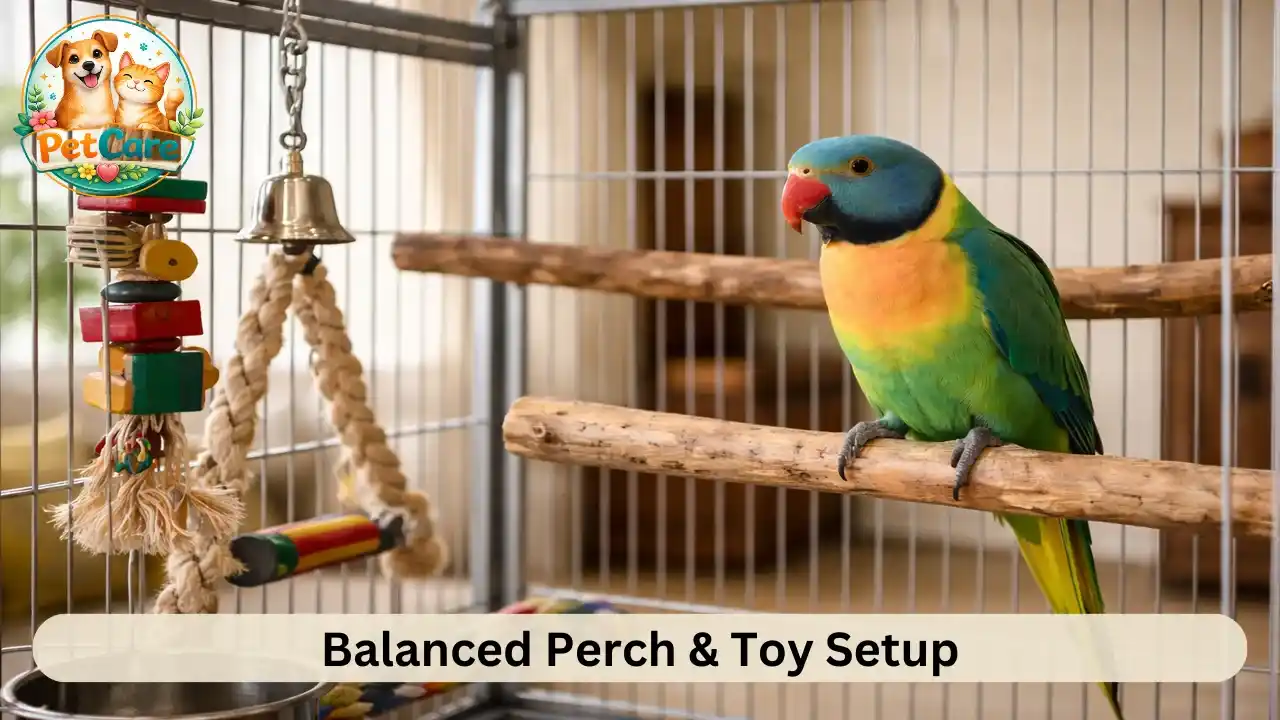
Perches are often overlooked, but they are a big part of an Ideal cage setup for parrots in India.
Use Different Types of Perches
Instead of using only one plastic perch, include:
-
Natural wooden perches
-
Rope perches
-
Different thickness options
Different textures help keep the bird active and comfortable.
Positioning Tips
-
Place one perch at mid-level.
-
Avoid placing all perches directly above food bowls.
-
Leave space for wing movement.
Overcrowding the cage with too many perches is another common beginner mistake.
Food and Water Bowl Placement
In a proper bird cage environment for parrots, bowl placement matters.
-
Use sturdy stainless steel bowls.
-
Fix bowls at mid-height.
-
Keep food and water away from droppings.
In most Indian homes, dust can settle quickly, so water should be changed daily. Clean bowls regularly to maintain hygiene.
Cage Accessories for Parrots in India
Accessories should provide stimulation but not clutter the cage.
Safe Toys for Parrots
Consider:
-
Wooden chew toys
-
Bell toys (securely attached)
-
Rope swings
-
Simple ladders
Rotate toys every few weeks. This keeps things interesting without overwhelming the bird.
When thinking about cage accessories for parrots in India, remember — simple is better. Many pet owners overload cages thinking more toys mean more happiness, but too much can actually restrict movement.
Cage Base and Flooring Setup
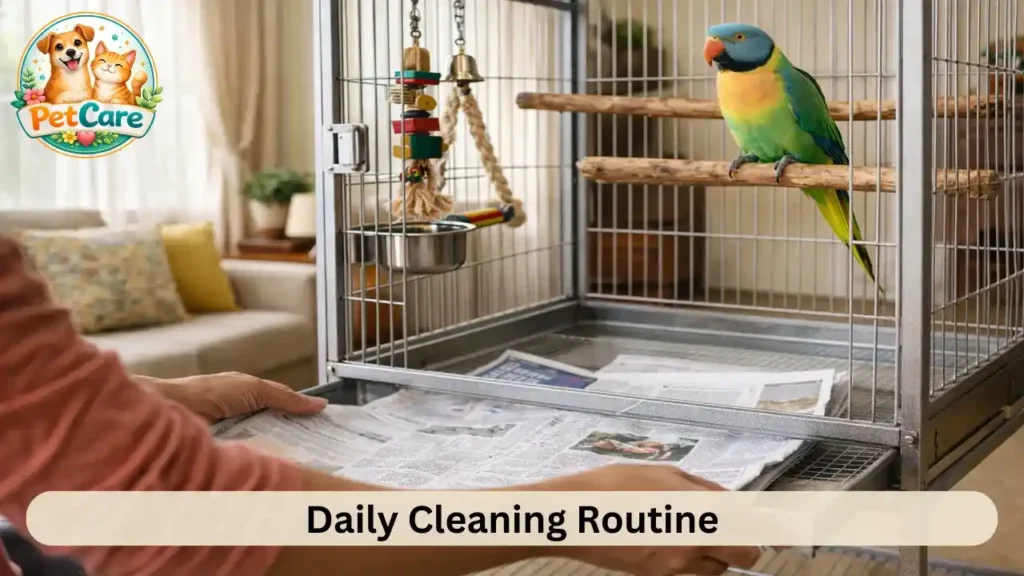
Most cages come with a removable tray at the bottom.
For easy cleaning:
-
Line the tray with plain newspaper.
-
Avoid scented liners.
-
Clean the tray daily.
In humid parts of India, regular cleaning prevents odor buildup.
Keeping the bottom clean is an important part of indoor parrot housing setup.
Managing Temperature and Weather in India
India’s weather varies a lot — extreme summers, heavy monsoons, and cool winters in some regions.
Summer Tips
-
Ensure proper ventilation.
-
Keep the cage away from direct fan air.
-
Offer shade during the hottest hours.
Winter Tips
In colder northern regions:
-
Keep the cage away from drafty windows.
-
Cover part of the cage at night with a breathable cloth.
Managing temperature is an important aspect of an Ideal cage setup for parrots in India, especially because climate changes can be intense.
Daily Outside-Cage Time
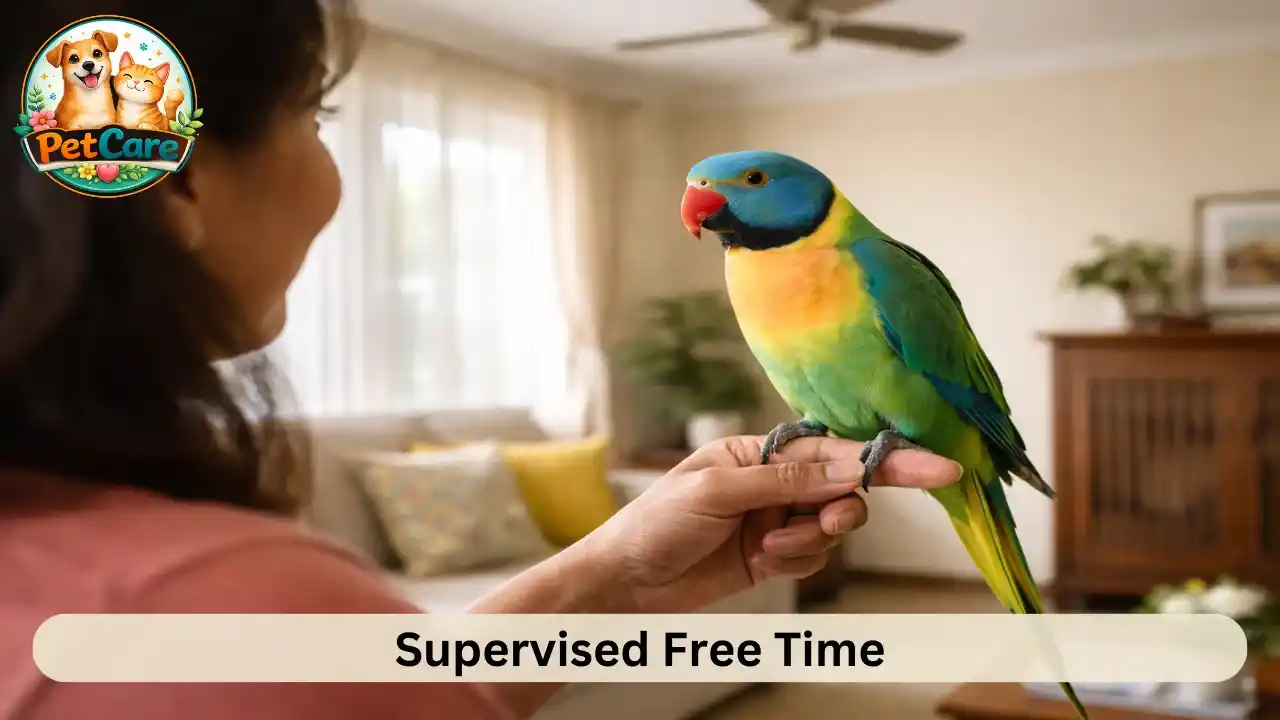
No cage, no matter how perfect, replaces free movement.
In many Indian apartments, supervised free time inside a closed room works well. Make sure:
-
Ceiling fans are off.
-
Windows are closed.
-
Electrical wires are out of reach.
An apartment parrot cage arrangement should always include planning for safe out-of-cage time.
Common Beginner Mistakes to Avoid
Many new bird owners learn through trial and error. Here are some things commonly done wrong:
-
Buying decorative but tiny cages
-
Placing the cage in noisy areas all day
-
Overcrowding with too many toys
-
Neglecting daily cleaning
-
Keeping the cage too low to the ground
Parrots feel safer when their cage is slightly elevated — at least at chest level.
Creating a Comfortable Parrot Habitat
A balanced comfortable parrot habitat in India generally includes:
-
Spacious cage
-
Mixed perch sizes
-
2–3 rotating toys
-
Clean food and water bowls
-
Proper airflow
-
Gentle natural light
You don’t need expensive imports or complicated designs. What matters is practical planning.
How Often Should You Upgrade the Setup?
As your parrot grows or becomes more active, you may notice the cage feels smaller. Many pet owners upgrade within a year.
Also, review setup changes during:
-
House shifts
-
Climate changes
-
When adding another bird
Gradual improvements keep the parrot enclosure setup for beginners manageable and stress-free
FAQs About Ideal Cage Setup for Parrots in India
It depends on the species, but generally the cage should allow full wing stretching without touching the bars. Bigger is always better.
It’s not ideal for full-day placement. Occasional fresh air is fine, but protect from direct sun, rain, and strong wind.
Usually 2–3 at a time are enough. Rotate them every few weeks to keep your parrot engaged.
A well-ventilated corner of the living room works well. Avoid kitchens, direct sunlight, and constant noise.
Final Thoughts on Ideal Cage Setup for Parrots in India
Setting up the Ideal cage setup for parrots in India is less about style and more about understanding your bird’s needs and wants.
From my experience, parrots thrive in environments that are:
1)Stable
2)Clean
3)Social
4)Spacious
Even small changes, like repositioning a perch or moving the cage away from harsh sunlight can make a noticeable difference in everyday comfort.Take your time setting things up. Observe your parrot. Adjust when needed. That is how most experienced pet owners learn slowly, patiently, and practically.So,if you are thinking to keep a pet then I will suggest you that it would be Parrots.